Ходжа Насредин и ростовщик Джафар:не дай, а возьми:
Цитата:
Цитата:
Цитата:
Цитата:
Цитата:
Главное из заявлений Ушакова о телефонном разговоре Путина и Трампа:
▪️Путин поздравил Трампа с нормализацией в секторе Газа;
▪️Российский лидер изложил позицию РФ по ближневосточному урегулированию;
▪️Путин рассказал Трампу, что войска РФ полностью владеют стратегической инициативой по всей линии соприкосновения в СВО;
▪️Путин и Трамп в беседе упоминали взаимные симпатии народов России и США, назвали нынешние отношения двух стран парадоксальными;
▪️Трамп в беседе с Путиным подчеркнул необходимость скорейшего мира на Украине и отмечал, что это самый трудный для разрешений конфликт;
▪️Путин в беседе с Трампом высоко оценил усилия первой леди США по воссоединению российских и украинских детей с семьями;
▪️Путин заявил Трампу, что "Томагавки" не изменят ситуацию на поле боя, но нанесут ущерб отношениям РФ и США и урегулированию на Украине;
▪️Подготовка саммита РФ и США начнется с телефонного разговора Лаврова и Рубио;
▪️Будапешт как место встречи был предложен Трампом, Путин поддержал;
▪️Разговор Путина с Трампом состоялся по инициативе российской стороны.
Цитата:
Цитата:
Цитата:
Цитата:
Пресс-секретарь Белого дома Каролин Ливит прокомментировала состоявшийся разговор Владимира Путина и Дональда Трампа.
«Что касается войны между Россией и Украиной, которую президент по-прежнему решительно намерен завершить, — это был очень хороший и продуктивный разговор между двумя президентами. Они обсудили множество вопросов. Президент Путин поздравил его с достижением мира на Ближнем Востоке. Также, разумеется, обсуждалась война между Россией и Украиной. Стороны договорились созвать на следующей неделе встречу своих представителей высокого уровня, чтобы продолжить эти крайне важные переговоры. Возможно, за ней последует ещё одна личная встреча между президентом Трампом и президентом Путиным. И, конечно, завтра мы снова примем президента Зеленского в Белом доме, чтобы президент мог продолжить обсуждение с украинской стороной этого конфликта».
"Общественное" англосаксонское против "частного" американского.
_________________
С интересом и понятными ожиданиями, Dimitriy.
North Atlantic alert as orcas begin targeting commercial ships in what experts describe as coordinated attacks
What began as rare encounters off the Iberian coast now shows up in captain’s logs from Galicia to the Strait of Gibraltar, and in wary chatter on VHF. Experts say it looks learned, even coordinated. Insurers are watching. Mariners are changing habits mid-season.
It started like a shiver through the deck plates. A coastal freighter off Cape Finisterre rolled on a glassy swell, the night bridge lit soft blue, an ordinary watch with the engine ticking steady, when the helm shuddered as if from a hidden hand. The bow kept true, but the autopilot clicked off and the rudder felt heavy, like someone leaning against it from below. A deckhand ran aft and froze. Black-and-white shapes ghosted the wake, three, then five, their dorsal fins cutting the oil-slick moonlight. The ship wasn’t alone out there. Then the rudder stopped answering.
Orcas, ships, and a new pattern in the North Atlantic
Maritime authorities on both sides of the Iberian Peninsula have watched a precise pattern emerge: orcas approaching from astern, focusing on rudders, and working in small groups as if on a shared task. Scientists prefer careful words, yet even the cautious are using phrases like social learning and coordinated behavior. The animals linger for minutes, touch, push, and sometimes disable steering by bending or breaking blades. It doesn’t look random. It looks practiced. The North Atlantic feels newly intimate.
Since 2020, the Iberian orca subpopulation has been linked to more than 700 documented interactions, according to community reporting collated by the GTOA (Grupo de Trabajo Orca Atlántica). Most events involve sailing yachts under 15 meters, yet commercial skippers—coasters, trawlers, whale-watch operators—now report close approaches, stern-circling, and hard bumps that rattle crockery. In May 2024, a sailing vessel sank near the Strait of Gibraltar after repeated rudder strikes, and smaller working boats off Galicia have had gear fouled after sudden turns to protect props. The animals seem to know where control lives.
Why the rudders? The leading theories point to a mix of curiosity, sensation-seeking, and fast cultural transmission within a small, tight-knit group. Rudders thrum, vibrate, and leave a turbulent wake—catnip for tactile, echolocating hunters. Some biologists wonder if the behavior began as a playful “fad,” was reinforced by the drama of a boat stopping, and then spread like a trend at sea. Others see ecological stress in the background, with changing prey patterns nudging orcas toward bolder experimentation. Attack may be the wrong word. Intent is the right question.
How crews are adapting at sea
Captains in the known hotspots are evolving a playbook built on three words: slow, quiet, predictable. When orcas approach, many reduce speed and lock the helm to reduce the rudder’s tempting flutter. Some take the engine out of gear to calm the stern flow, then wait—eyes on the wake, radio on Channel 16. The goal is to remove the “game.” Boredom is a life raft.
Common mistakes come from adrenaline. Crews try to outrun the animals, thrash the rudder to “shake them off,” or bang on the hull in hopes of scaring them away. That mostly escalates things. **Calm beats noise.** Bring people off the stern, log the time and position, and prepare for a loss of steerage with pre-briefed roles. Let’s be honest: nobody really does that every day. Practice once, though, and the body knows what to do.
Guides in Spain and Portugal now urge a short checklist and a mindset shift: treat the encounter as weather, not war.
“Rudder-first behavior is striking because it’s smart,” says marine ecologist Marta Guerra. “They’ve learned where to press to get a reaction. Our job is to remove that reaction.”
What this moment says about us and the oceans
We’ve all had that moment when a familiar place surprises us, and the world we thought we knew shifts by a degree. The orcas are teaching that lesson to a busy sea, turning the invisible into the unignorable. Ships run on routine. The animals run on attention. There’s friction where those meet, and it’s rewriting habits.
Some headlines love the word attack, and the images are undeniably dramatic, yet the day-to-day reality is stranger and subtler. Most interactions end without damage. Large cargo ships are rarely affected, simply because their rudders sit deep and their prop wash is vast. Fishing vessels and yachts live closer to the skin of the sea, which makes them more interesting to a curious mind. *The ocean felt crowded in a way it never used to.*
Mariners are a pragmatic tribe, and their stories carry the smell of diesel and coffee. One Galician skipper told me he cut speed, shifted to neutral, and watched two juveniles trace the rudder while a larger female hung back like a teacher. After six minutes, they lost interest. He lit a cigarette with hands that were not quite steady and set a slow course for port. **No bravado. Just relief.**
In ports from Vigo to Cascais, you hear different theories traded over net mending and fresh bread. Some argue the animals are frustrated by dwindling bluefin tuna; others think a few individuals stumbled on a high-sensation behavior and taught the rest. The truth may live across all those points. Social mammals get bored, learn fast, and respond to feedback. A spinning wheel and a surging wake offer both. **Coordinated doesn’t have to mean hostile.**
There’s also policy moving in the background. Spain and Portugal have issued temporary advisories and mapped “interaction zones,” asking smaller boats to alter routes or seasons when pods are present. Insurers are quietly revising risk models for specific corridors, while shipowners update standing orders on watch routines and emergency drills. Soyons honnêtes? That’s not a sentence you overhear on a bridge. Yet the subtext is everywhere: stay nimble.
On deck, the human part of this story is simple: fear, then adaptation, then a working truce with a living ocean. The smartest response has been to dial down drama, gather data, and let the fad burn out. That takes patience and a little humility. It also takes luck. Mariners know both run out sometimes.
It’s hard to shake the image of those fins in the wake, a moving geometry with purpose. Scary, yes. Also a reminder that we’re not alone out there, not even close. The North Atlantic is busy with ships and histories and lives, but it’s also busy with eyes looking back. What we do next will travel through that water as a story of its own. Shareable, memorizable, teachable. The sea keeps the receipts.
...
_________________
С интересом и понятными ожиданиями, Dimitriy.
Настоящий пример на столько необычен, что а.п. решил выделить его в отдельный пост в другой теме:
Цитата:
'Pretty obvious' Putin doesn't want peace in Ukraine, European ministers warn
Back to Brussels, the foreign ministers from European Nato countries showed little patience with Moscow this morning.
“What we see is that Putin has not changed any course. He’s pushing more aggressively on the battlefield,” Estonian foreign minister Margus Tsahkna said in comments reported by AP. “It’s pretty obvious that he doesn’t want to have any kind of peace.”
Finland’s foreign minister Elina Valtonen struck the same note.
“So far we haven’t seen any concessions from the side of the aggressor, which is Russia, and I think the best confidence-building measure would be to start with a full ceasefire,”
she told reporters.
Чрезвычайно парадоксальная логика: если побеждающая на поле боя Россия не согласна в
одностороннем порядке
остановить свое наступление, безоговорочно и
односторонне
принять для себя условия побежденной стороны, то она не хочет мира.
_________________
С сожалением и понятными пожеланиями, Dimitriy.
‘Everyone will miss the socialising – but it’s also a relief’: five young teens on Australia’s social media ban.
As the under-16s social media ban looms, Guardian Australia speaks to five 13 to 15-year-olds about what they will miss, and what government should be doing instead.
Australia’s world-first social media ban for under-16s will begin in just a few days. Malaysia, Denmark and Norway are to follow suit and the European Union last week passed a resolution to adopt similar restrictions. As the world watches on, millions of Australian adolescents and their parents are wondering just what will actually change come 10 December.
Concerns around the negative impact social media use can have on the wellbeing of young people have been around since the quaint days of Myspace – long before those to be affected by the ban were even born.
Supporters of the social media “delay” policy believe that restricting under-16s access will reduce mental health risks, exposure to harmful content and the social malaise associated with being chronically online. Those opposed worry that the legislation is ill-conceived, will push children into murkier corners of the web, impinge on their human rights, exacerbate some mental health conditions or simply prove futile.
As the world waits to see just how this grand experiment will play out, the Guardian spoke to teenagers about their feelings as the ban approaches. All five are on the youth advisory board of the Australian Theatre for Young People, which will next month host a production of The Censor, which canvasses issues of teen social media use, literacy and adult censorship of their lives.
From indifference to frustration or simply being confounded by the choices being made by the adults in the room, the perennial teen question remains: “What’s the big deal?”
‘It feels deeply unfair the government is punishing an entire age group ’
Sarai Ades, 14
I’ve been using Snapchat, Facebook Messenger as well as Instagram and TikTok since I got a phone in 2023.
I find the “delay” very frustrating because it targets young people instead of addressing the issues at the root of online harms; things like algorithmic amplification of bigotry, the spread of misinformation and the lack of accountability for the companies and creators who profit from harmful or discriminatory content.
Teens are not the primary drivers of harmful content. Much of it comes from high-influence adult creators, political commentators and extremist groups, and it feels deeply unfair that the government is punishing an entire age group by removing access rather than regulating platforms.
I think media literacy is very important, especially for our generation. We need to be taught the right methods to deal with the online world in ways that don’t become harmful – and that includes the bigotry that is often disguised as “opinions” on social media. Eliminating [access] without doing anything about building our media literacy is the equivalent of the government banning books until we are 16 and expecting us to magically start reading critically.
Right now, media literacy doesn’t figure highly in our syllabus, but it should. It’s taught in a very boring way and it isn’t up to date; we might learn about cyberbullying but not echo chambers, for example. And with the rise of AI, there is a whole new world to understand that could harm us, but we aren’t taught anything about that. I think the government could definitely be focusing its efforts there and on specific aspects of social media, rather than just establishing a whole ban.
Having less exposure to this kind of harmful content might be good for our mental health in some ways, but I think the negatives outweigh the positives.
I grew up on another continent and social media is a primary way that I feel connected with these childhood friends. Australia promotes itself as a multicultural, globally connected country, but this ban will cut teens off from their cultural communities and international friendships. And for multicultural teens that loss is significant, especially living in an Anglo-dominant country like Australia.
My generation uses social media as a tool for identity formation; we explore other cultures, our creative expression, neurodivergence, gender identity, political beliefs. Removing social media removes a major avenue for self-discovery and belonging.
My daily screen time average on socials is about two hours, shared between Pinterest, Instagram and TikTok equally. Developing a healthy relationship with your screen time has become quite trendy. Me and most of my friends already use apps that help us manage our time online, we all use “do not disturb” and only check our phones when we have time.
Whatever time I do gain will be used to invest in my goals, but the irony is that I probably wouldn’t have half those goals without social media. The ban doesn’t just take away an app, it takes away inspiration and opportunities. For kids like myself in the performing arts, taking away our ability to share our skills online also limits our exposure and could put us behind on the world stage.
Even if they aren’t trying to develop a presence though, the ban will drive teens to less savoury corners of the internet – shady apps, private browsers or unsafe websites, instead of regulated platforms. Cutting off access to socials won’t eliminate the need for online connection, it will just drive it underground.
‘I don’t think I’ll be affected that much’
Pia Monte, 13
I only have accounts on WhatsApp and Pinterest so I won’t be directly affected by the social media ban, but I still don’t like it. I know people whose main support networks are on social media, so if that’s being taken away they will be left with nothing. I’ve had a really positive experience on the social media I use, so I don’t see why it should be banned for everyone.
I don’t keep my phone in my room overnight, I just check it quickly in the morning for notifications, but I don’t really use it before school. I use it mostly to take a break from study, my daily screentime average this week was 49 minutes.
I mostly use social media to look at cooking videos on YouTube or Pinterest; I can still use YouTube for that without an account and Pinterest isn’t being banned. Neither is WhatsApp and that’s what I use mostly to keep up with friends – I don’t know that many people my age who spend lots of time on the apps that are being banned anyway – so I don’t think I’ll be affected that much. I might get accounts for things like Instagram when I’m older, but there’s no rush.
‘I don’t think two years is a long time to wait to use it again’
Grace Guo, 14
I’m quite indifferent to the ban, it won’t affect me that much because I mostly use messages and WhatsApp to chat with friends. I do post on YouTube sometimes, but I won’t care if I can’t. Sometimes the comments aren’t very nice so I won’t miss those. And anyway, you can still access the content without an account. When I’m using YouTube to research new skills or school work, sometimes irrelevant or inappropriate things come up, but that doesn’t change if you have an account or not.
I’ve only been using Instagram since the start of this year, it’s just another way to communicate with friends and I don’t think two years is a long time to wait to use it again. It’s not a big deal to me, I’ll just use other messaging apps more.
I only looked at my phone to check the time this morning. I first checked it for messages after school on my way home on the train. My screen time average is about an hour or two a day; most of that is chatting with friends across all the apps. I feel like our generation is quite dependent on it and I have friends who use their phones lots more than me.
Overall, for kids my age, I think things will be pretty much the same – they will get around it if they want, use the banned apps without accounts or just wait. Maybe for younger kids the ban will delay some harmful experiences. But also it might be a lot to deal with at 16 if you haven’t been exposed before.
‘Adults are viewing social media as something that hijacks our whole life’
Ewan Buchanan-Constable, 15
I’m a bit disappointed with the ban because I was introduced to a lot of my current creative interests through YouTube. At the moment I only use YouTube and Discord. I have a couple of videos up, but it’s not a regular thing. I use Discord to talk to friends and to engage with communities, mostly about movies and video games. Most of my friends use the apps that are being banned but I don’t feel excluded because the content that’s on there doesn’t really interest me.
I use my phone as an alarm but I don’t start using it in bed. Once I’ve eaten and showered I might put something on YouTube in the background while I get ready, but it’s not my main focus. My daily average is about two hours a day. On the weekends though, my screen time goes up to more like five hours because I often have podcasts, music or videos playing on YouTube while I study or do chores.
Adults are viewing social media as something that hijacks our whole life, but really it’s just something we use in downtime and it doesn’t stop us from reaching out to each other and arranging to leave the house and hang out or anything like that. I also read, write and draw a lot. I play Dungeons and Dragons and video games.
The way I look at it is that the goals the government has about mental health and limiting the harm of inappropriate content could be achieved through regulation and education rather than a ban.
Making that education start earlier would be important, being able to navigate online spaces safely is something kids need to know about much younger now. And I think it might be dangerous to forget that and just let them loose at 16. They’re going to encounter lots of weird stuff online before then anyway, so they should be taught about it earlier.
I’m not sure if I will ever start using social media, unless it’s for my career. I want to be an actor so for me it would be a professional tool rather than a source of entertainment.
‘No one is going to miss scrolling’
Emma Williamson, 15
I turn 16 in February, so it will just be the holidays without Instagram for me really. I opened my account a couple of years ago and then I changed schools so it has been a good way to stay in touch with those people I don’t see every day any more.
I think everyone will miss the socialising part. But it’s also a relief to not have to do that on a platform designed to lure you in and waste your time, no one is going to miss scrolling. I get bored of watching reels quickly anyway, and AI slop is the worst, it takes so long to keep blocking that content and more keeps coming. I only want to see real content about my interests, like old audition videos of actors.
My daily average for Instagram is about half an hour. I use an app called Fitlock that gives me access to certain apps I choose based on how many steps I do. It’s easy to turn off, but I try to stick to what I’ve earned. And funnily enough, most of what I’ve learned about how and why to keep social media use down has been from the apps themselves. There’s lots of content from people a bit older than me encouraging people to get off their phones and go and live their lives in the real world.
My friends and I have group chats on Instagram but also on WhatsApp, so we will just spend more time there. Saying that, I find that Instagram content can be a fun conversation starter, so maybe we won’t chat as much without that to share.
At school they teach about cyberbullying and harmful content but never about how to use the apps in healthy ways. I think the government could spend their money better on educating rather than restricting. Right now though what they teach us is really boring, they’d need to work on that.
...
_________________
С пониманием и отраслевыми пожеланиями, Dimitriy.
Will other countries follow Australia’s social media ban for under-16s?
Several European nations are already planning similar moves while Britain has said ‘nothing is off the table’.
Australia is taking on powerful tech companies with its under-16 social media ban, but will the rest of the world follow? The country’s enactment of the policy is being watched closely by politicians, safety campaigners and parents. A number of other countries are not far behind, with Europe in particular hoping to replicate Australia, while the UK is keeping more of a watchful interest.
Europe.
Denmark
has said it will ban social media for under-15s, with the prime minister, Mette Frederiksen, saying mobile phones and social media are “stealing our children’s childhood”. The policy could become law next year.
Norway
bringing in a minimum age limit of 15. The prime minister, Jonas Gahr Støre, has said the country must protect children from the “power of the algorithms”.
Ireland
is introducing a digital wallet to verify the age and identity of social media users. The media minister, Patrick O’Donovan, said this month an Australia-style ban was “one of the things that we are holding in reserve”.
In
Spain
, the prime minister, Pedro Sánchez, has called on parliament to pass a bill raising the minimum age for using social media to 16.
In
France
, the president, Emmanuel Macron, has threatened to ban social media for under-15s and a parliamentary commission has also recommended such a move, including an overnight “digital curfew” for 15- to 18-year-olds.
The government in
the Netherlands
, meanwhile, has advised parents to block their children from social media until they are 15.
In
the EU
European parliament has passed a non-binding resolution, demanding under-16s be banned from using social media unless their parents decide otherwise. The resolution warned of the “addictive” nature of social media but is non-binding, meaning it will not become law. The EU already has legislation that enshrines digital safety in the form of the Digital Services Act, but an appetite remains to take oversight further.
The Danish MEP behind the resolution, Christel Schaldemose, said she would continue to push for continent-wide regulation, although that ultimately requires a three-way cooperation between member states, the EU parliament and the European Commission, the EU’s executive arm.
The MEP said she was “not giving up” until tougher regulations were in place. “A strong age limit is a good starting point,” she said.
Ursula von der Leyen, the commission’s president, has promised to establish a panel of experts who will advise on the best approach for protecting children. Announcing the panel in September, she said parents were drowning in the “tsunami of big tech flooding their family homes”.
UK
In
the UK
the Labour government has not ruled out a ban, saying “nothing is off the table” but any ban must be “based on robust evidence”.
Last year momentum gathered behind a private member’s bill (legislation proposed by an individual lawmaker, not the government), imposing restrictions on under-16s using social media. But the bill was ultimately watered down, albeit with a government commitment to research the issue further.
The Molly Rose Foundation, a charity established by the family of Molly Russell, a teenager who killed herself after viewing harmful online content, is concerned that an age ban would do nothing to make social networks safer. It said this week that teenagers living under an under-16 ban could face a “cliff edge” of harm on unregulated platforms when they turn 16.
Beeban Kidron, the crossbench peer and influential online safety campaigner, said a ban was not a “magic bullet” but could spur tech companies to do more to protect children.
“The Australian ban is a response to the failure of the tech sector to design products and services that are safe and age appropriate for children. It represents a profound challenge to Silicon Valley – by insisting that they design their products for keeping our kids safe – or leave them the heck alone,” she said.
Meanwhile, the UK government will monitor whether its new set of digital guardrails, under the Online Safety Act, have the desired impact on child safety.
US
In
the US
, social media restrictions are being brought in at state level.
Utah
has introduced legislation requiring under-18s to have parental consent to use social media, while also restricting social media use at night without similar permission.
The
Florida
governor, Ron DeSantis, has signed a bill banning under-14s from joining social media, although the legislation – as with other similar state laws around the US – is subject to legal wrangling over whether it breaches the first amendment right to free speech.
Virginia
, meanwhile, has passed a law limiting under-16s to one hour of social media access per day, with any further access requiring parental permission.
Georgia, Tennessee
and
Louisiana
have also passed bills requiring parental consent for under-16s to open social media accounts.
Rahm Emanuel, the former White House chief of staff under Barack Obama, is considering a presidential run and has said the US should follow Australia’s lead. Right now, a US-wide ban seems unlikely amid a Washington gridlock. Ted Cruz, the Republican senator, has teamed up with Democrat peers in Washington to introduce a bill formally banning under-13s from social media and barring feeding “algorithmically targeted content” to under-17s. The bill has not become law.
Arturo Béjar, a former senior engineer and consultant at Meta, who blew the whistle on online safety at the Facebook and Instagram owner, told the Guardian that nationwide legislation was still some way off.
He said: “It is not clear how legislation is going to move forward here. The US has many bereaved parents, and bipartisan support, but turning that into legislation is taking a long time.”
Elsewhere.
Malaysia
plans to ban social media for under-16s starting from next year and
Brazil
has raised the minimum age for Instagram to the same level.
At the
United Nations
, the attitude is more cautious. Unicef, the UN agency for children, has warned that social media bans carry risks and “may even backfire”. It said internet platforms can be a lifeline for isolated or marginalised children and that regulation should not be a substitute for tech companies investing in safety.
But as the actions of Australia and other governments show, states around the world are no longer willing to wait.
_________________
С пониманием и отраслевыми пожеланиями, Dimitriy.
…
«Пойдем от простого к сложному: морские подходы к базам, портам и тому подобной инфраструктуре, помимо всего прочего, охраняют боновые сети. В подводной войне давно применяются торпеды, которые схожи с необитаемыми аппаратами, средства противоторпедной защиты тоже известны, с учетом новых угроз они развиваются и модифицируются», — сказал он.
…
Цитата:
Боновые и боносетевые заграждения от самоходных плавсредств.
Используются для защиты акваторий:
• гидротехнических сооружений объектов энергетической сферы (ГЭС, ГРЭС);
• объектов нефтегазовой сферы (НПЗ, нефтебазы и нефтехранилища);
• объектов сферы жизнеобеспечения (водозаборы, водохранилища, водоснабжающие каналы), крупных транспортных узлов (морские и речные торговые и пассажирские порты).Применяются для организации периметральной караульной дорожки на плаву для защиты плавучих объектов или объектов в акватории.
Боновые заграждения (БЗ) и боносетевые заграждения
(БСЗ) - это один из самых распространенных вариантов для предотвращения попыток проникновения на объект с прилегающих к нему акваторий подводно- и надводно-диверсионных сил и средств. Физическая преграда создается плавучими металлическими или полимерными конструкциями. Комплектность варьируется от единичных модулей необходимой длины до технически сложных инженерных сооружений.
В отличие от боновых заграждений, боносетевые заграждения также позволяют защитить охраняемую территорию от проникновения под водой.
Предлагаем 3 варианта исполнения, которые могут дорабатываться согласно пожеланиям заказчика.
1. Боновые заграждения (БЗ).
Стальные или полимерные плавучие боны, заполненные специальной двухкомпонентной пеной для обеспечения максимальных показателей плавучести.
2. Боносетевые заграждения (БНЗ).
Подводная часть комплектуется кольчужной металлической сетью специального плетения, что исключает скрытое проникновение нарушителей на спецобъект.
3. Боносетевые заграждения со специальным надводным заграждением.
Дополнены конструкцией из Y-образных стоек и колючей проволоки/“Егозой” (колюще-режущие лезвия-шипы).
Тип 1.
Тип 2.
Тип 3.
Цитата:
Петербургские инженеры из компании «Русич» разработали систему специальных заграждений «Аурелия» для борьбы с безэкипажными катерами. Ее уже испытали в акватории Финского залива при участии представителей ВМФ России.
«Аурелию» можно установить на воде в районе стратегических объектов, чтобы создать защиту от атаки надводных безэкипажных и пилотируемых катеров.
Представитель разработчика пояснил, что «Аурелия» засасывает активные элементы, приводит в негодность двигатель БЭКа или катера с водометами, погружными двигателем.
Система состоит из модулей, длина каждого из них составляет 10 м, а ширина — 3 м. Это плавающая опора, соединительная сеть, антиводометные элементы и погружной якорь.
Цитата:
Цитата:
Цитата:
Цитата:
Противоторпедные сети (…расширенный перевод).
Со времен Великой Армады главным оружием на море была артиллерия. Возрастал калибр пушек, увеличивалось число орудий, создавались новые снаряды, но артиллерия продолжала быть решающей силой любого морского сражения. Однако спор нападения и защиты оставался актуальным – с увеличением мощности орудий возрастала и толщина брони на кораблях. Кораблестроители навешивали броневые листы на башни, покрывали ими борта и надстройки, особо защищали котельное и машинное отделения. Однако во второй половине XIX века появились альтернативные способы борьбы с кораблями противника. Идея торпедного удара – это своего рода боксерский хук ниже пояса (ватерлинии) корабля, там, где нет необходимой брони, где защита наиболее слаба.
В 1866 году талантливый инженер и бизнесмен Роберт Уайтхед изобрел первую торпеду, или, как ее еще называли, «локомотив Уайтхеда». Идея создания торпеды уже давно витала в воздухе, ведь прообразом «самодвижущихся мин» были шестовые мины, которые во всю применялись в Гражданской войне в Америке. Первая торпеда была длиной 3.53 метра, диаметр ее составлял 356 мм, она двигалась под водой с помощью винта, работавшего на сжатом воздухе. Дальность хода первой торпеды была всего 200 метров, скорость 6 узлов, вес конструкции 136 кг, вес взрывчатки в торпеде – 8 кг.
Такие характеристики пока не внушали никому опасений – ведь реальной боевой ценности торпеда пока не имела. Однако «угри» быстро совершенствовались. В 1871 году торпеды уже имели дальность 650 м, скорость 24 узла (существовал так же и второй режим хода – 1200 метров на 17 узлах), и вес заряда равный 30 кг.
Поскольку первое время дальность пуска торпеды была небольшой, то есть корабль – носитель торпед должен был сблизиться с целью практически вплотную, лучшим противодействием торпедным атакам считались скорострельные орудия. В самом деле – сократить дистанцию до корабля, имеющим большое количество мелкокалиберных скорострельных пушек, было практически невозможно. Однако прогресс торпедного оружия заставил конструкторов искать новые способы защиты от торпед.
Одним из способов защиты от новой напасти и стали противоторпедные сети. Мысль инженеров была проста - поставить перед торпедой фальш-стенку, отдаленную от корабля на какое-то расстояние.
В 1874 году были проведены испытания первой противоторпедной сети. Это была металлическая оцинкованная сетка из 20-сантиметрового провода, закрепленная на 12-метровых штангах (выстрелах), расположенных на борту судна. Сеть поднималась из воды на 1.2 метра, а погружена была по киль судна. Эксперимент оказался удачным – сеть «поймала» все выпущенные торпеды.
В 1876 году комитет по торпедам Британского Адмиралтейства с горечью констатировал:
«Отныне ни один из больших кораблей не может оставаться в течение сколь-нибудь длительного времени в прибрежных водах противника без кораблей охранения».
В 1877 году проблема защиты от торпедных атак встала в полный рост. Дело в том, что на верфях Торникрофта в Англии была построена первая миноноска «Лайтинг» (27 тонн, длина 25 метров, скорость 18.5 узла, 3 торпедных аппарата) – специализированный быстроходный корабль для торпедных атак. Попасть в быструю юркую миноноску из пушки становилось уже довольно тяжело. Вслед за Англией подобные корабли начали строить Италия, Россия, Франция, а потом и другие страны.
В это же время были разработаны аппараты для торпедной стрельбы, которые отстреливали торпеду в заданном направлении.
В том же 1877 году броненосец “Тандерер” стал первым кораблем, оснащенным экспериментальными противолодочными сетями. Это был один из ответов на новую угрозу.
Постепенно начали разрабатываться и принципы использования сетей. Так, например, стало понятно, что скорость корабля является неплохой защитой от торпедных атак в море. Пока скорость торпеды была сопоставима со скоростью корабля – корабль на ходу в море спокойно мог уклониться от выпущенной торпеды. С другой стороны, корабль идущий с выпущенными сетями имел ограниченную скорость и гораздо худшую маневренность – то есть представлял собой более доступную цель.
Таким образом было выяснено, что противоторпедная сеть является средством защиты для кораблей, стоящих на якоре или в гавани. Для кораблей же на ходу главной защитой является их скорость и меткий огонь по миноноскам, заставляющий противника прекратить торпедную атаку.
На вооружение английского флота были приняты сети от фирмы Бульвант (Bullvant), состоящие из стальных колец 16.5 см в диаметре, к которым следующим рядом присоединялись кольца меньшего диаметра. Выносные 12-метровые штанги крепились по бортам судна.
Но были также и свои недостатки: во-первых, очень сложно было прикрыть сетью нос и корму судна; возникала опасность наматывания сети на винты. Во-вторых, при плохой погоде сети довольно часто рвались, или просто волны ломали штанги и сеть срывало. В третьих, торпеды, взорвавшиеся в сети, срывали секции и образовывалось незащищенное пространство, в которое корабль могла поразить другая торпеда.
В 1881 году в Англии на озере Портчестер произвели испытания противоторпедных сетей. Главным вопросом испытаний было проверить эффективность сетевой защиты корабля, определить минимальное расстояние до корпуса, на котором сети будут эффективны.
Судно было полностью закрыто сетями – от носа до кормы. Первый взрыв был произведен в 9 метрах от борта на поверхности воды, вес заряда был равен 36.3 кг. Корпус корабля не получил никаких повреждений. На следующий день по судну была выпущена 16” (406-мм) торпеда с 41.3 кг взрывчатки. Сети опять-таки были вывешены на 9-метровых штангах. Дистанция пуска торпеды была пистолетной – 90 метров. Взрыв был очень сильным, но повреждений судно опять-таки не получило. Одна из секций сети была сорвана.
Решили уменьшить длину штанг до 6 м, но и этот торпедный залп не привел к повреждениям корабля. Расстояние от борта до сети еще раз уменьшили – до 5 метров. В этот раз судно получило незначительные повреждения, на корпусе судна появились небольшие вмятины, кое-где были замечены течи.
Прогресс торпедного оружия так же не стоял на месте - к 1885 году характеристики «локомотивов Уайтхеда» возросли еще больше – скорость 30 узлов, вес заряда – 90 кг. Это стимулировало новые испытания сетей.
Они были продолжены в 1887 году. На этот раз использовались усовершенствованные сети от Булльвант, деревянные штанги были заменены на стальные, крепления сетей к выстрелам были усовершенствованны с той целью, чтобы легче было менять поврежденные секции.
9 июля миноносец «Везувий» выпустил 16” (406-мм) торпеду, которая сорвала одну из секций сети, но не смогла нанести повреждений судну. 10 июля произвели взрыв мины со 100 кг взрывчатки на расстоянии 9 метров от корабля, и на глубине в 6 метров, имитируя попадание в сеть торпеды с прибором Обри (регулятором глубины). В результате одна из штанг, держащих сети был погнута, судно повреждений не получило.
Эксперименты убедительно доказали, что противоторпедные сети являются надежным защитником от торпед. Рекомендованная дальность выноса сети от борта судна была определена в 8 метров.
Комиссии также понравился новый вариант сетей от Булльвант; в отчете отмечалось, что новый проект намного легче и более быстро устанавливается, чем уже существующие сети.
В том же году на маневрах Ройал Неви производилась отработка координированных торпедных атак против кораблей с выпущенными сетями. Результаты удовлетворили Адмиралтейство – флотилии миноносцев в ночной атаке обнаруживались на расстоянии не менее 750 метров, частый огонь кораблей быстро сбивал прицел атакующим, а единственные две торпеды, выпущенные в линейные корабли, попали в сети.
В 1894 году английский конструктор Марс предложил усовершенствованный вариант сетей – теперь выстрелы, на которые крепились сети, не свисали с борта, а выходили из специальных отверстий в корпусе корабля, почти на уровне воды.
Применение оцинкованного провода диаметром 6.5 см в уменьшили вес конструкции до 5 фунтов (2.3 кг) на кв. фут. До этого сети были более массивными – около 7 фунтов на кв. фут.
Такое расположение сетей не мешало орудиям в казематах вести огонь на борт. Сеть также позволяла кораблю двигаться, хотя и с небольшой скоростью. В 1906 году, к примеру, Флот Канала двигался с выпущенными сетями на 6 узлах. Специальный механизм установки сетей избавил экипажи от тяжелой работы по установке сетевых заграждений. Изобретение такого устройства позволило ставить вынесенные на 9 метров сети всего за 30 секунд, и сворачивать их обратно на полки через минуту после запуска механизма.
Первое активное использование сетей в боевых действиях случилось в Русско-японскую войну. Противоторпедные сети играли большую роль во время осады Порт-Артура японцами.
Именно отсутствие сетевых заграждений на внешнем рейде позволило японцам в ночь с 26 на 27 января 1904 года тяжело повредить русские броненосцы «Ретвизан», «Цесаревич» и бронепалубный крейсер «Паллада».
В ночь на 11 февраля 5-й отряд истребителей («Кагеро», «Мураками», «Сирануи» и «Югири»), а так же 5 брандеров заградителей попытались атаковать поврежденный «Ретвизан», приткнувшийся на фарватере между внешним и внутренним рейдом.
Наш броненосец, прикрытый с правого борта двумя рядами сетей, открыл огонь по японцам в 2.45. Атака миноносца «Кагеро» оказалась неудачной – торпеда прошла в стороне от заграждения и выскочила на берег. «Мураками», «Сирануи» и «Югири» так же попытались выйти на торпедную атаку, но сосредоточенный огонь с «Ретвизана» заставил их пустить торпеды с 3-х кабельтовых (550 метров). Одна из торпед попала во второе сетевое заграждение и взорвалась там.
Вторым ярким примером удачного использования противоторпедных сетей в Русско-японской является конечно же знаменитое противостояние миноносцев Того и эскадренного броненосца «Севастополь» в бухте Белого Волка 26 ноября-19 декабря 1904 года.
Началась эта эпопея 23 ноября, когда командир «Севастополя» капитан 1-го ранга Н.О фон Эссен обратился к командующему Первой Тихоокеанской эскадрой контр-адмиралу Вирену с просьбой выйти на внешний рейд Порт-Артура, попытаться исправить повреждения и прорваться во Владивосток.
Утром 26 ноября «Севастополь» развел пары и передислоцировался в бухту Белого Волка. На корабле выставили сети, потушили все огни, экипаж привел корабль в полную боевую готовность. На берегу были развернуты прожектора, выставлены дозоры наблюдателей.. Сетей не хватило на корму броненосца и на часть правого борта. Команда «Севастополя» лихорадочно пыталась выйти из затруднения, соорудив в носовой части деревянный бон.
Японцы произвели несколько очень сильных торпедных атак, пытаясь уничтожить последний порт-артурский броненосец.
В ночь с 29 на 30 декабря 14-й и 20-й отряды миноносцев атаковали «Севастополь», однако множество торпед попали в сети и повреждений броненосец не получил. Около 4-х часов утра была произведена торпедная атака минными катерами с «Микасы» и «Фудзи». Одна из торпед, взорвавшись в сетях, повредила носовую часть обшивки таранного отделения, которое заполнилось водой.
1 декабря японцы решили произвести генеральную атаку на «Севастополь». Планировалось атаковать корабль с трех сторон – с носа, с левого и правого борта. На атаку броненосца были брошены ВСЕ миноносцы японской эскадры – 2-й, 6-й, 9-й, 10-й, 12-й, 14-й, 15-й, 16-й и 21-й отряды. Вот как вспоминает эту атаку один из участников боя, лейтенант Дмитриев:
«Стоял страшный грохот. Около «Севастополя» то и дело поднимаются огромные столбы воды, закрывая броненосец, но он продолжает стоять без крена, значит торпеды взрываются в сетях».
В общей сложности в эту ночь по броненосцу было выпущено около 30 торпед. Только одна торпеда, взорвавшись в навесной сети, спущенной с носа, причинила кораблю незначительные повреждения.
В ночь на 3 декабря началась шестая атака на «Севастополь». В ходе этой атаки две торпеды взорвались в сетях бонового заграждения, а третья попала в незащищенную корму броненосца. Эта торпеда произвела сильнейшие разрушения, были затоплены рулевое, румпельное и провизионное отделения. «Севастополь», получив сильный крен на корму, вынужден был сесть кормой на грунт.
В общей сложности во всех атаках в «Севастополь» было выпущено 104 торпеды, из которых только 3 нанесли повреждения броненосцу, а 1 прошла в незащищенном сетями месте и серьезно повредила корабль.
Сети доказали свою полезность.
В период между Русско-японской и Первой Мировой войнами произошло значительное улучшение торпедного оружия. Еще до баталий у Порт-Артура у торпед появились специальные резаки, позволяющие торпедам преодолевать сетевые заграждения. Резаки были двух типов – пистолетный и типа «ножницы». Пистолетный резак был сконструирован во Франции. Принцип действия этого типа резака заключался в отстреле части сети, чтобы торпеда смогла пройти к корпусу корабля. Хотя пистолетный резак показывал неплохие результаты в лабораторных условиях, он не прижился из-за сложности конструкции.
Резак-ножницы перерезал одно или несколько звеньев сети.
Для противодействия резакам второго типа немцы и англичане уменьшали размеры ячеек сети, чтобы поставить перед резаком более сложную задачу: ведь перерезать, к примеру, 10 ячеек одним ударом гораздо труднее, чем одну или две.
В 1909 году произошел новый технологический скачок в развитии торпедного оружия. В торпеду ввели систему подогрева сжатого воздуха, что увеличивало дальность действия и скорость «угря». Впервые эту идею предложил лейтенант Российского Флота И.И. Назаров еще в далеком 1899 году, но воплотить ее в жизнь смогли лишь к 1910-му году. Торпеды так же оснастили впрыском воды, что повысило запас энергии торпеды еще больше. Так например, 18” (450-мм) английская торпеда образца 1911 года несла 100 кг взрывчатого вещества и имела два режима хода – 2000 метров при 44 узлах или 6000 метров при 31 узле.
Такое улучшение ТТХ торпед поставило вопрос о целесообразности сетевой защиты кораблей – в самом деле, если при испытаниях сетей в 1887 году использовались «угри» с 41.3 кг ВВ, то сейчас торпеды, с возросшим более чем в 2 раза весом взрывчатки не только срывали секции, но и наносили повреждения подводной части корабля. Так, Ройал Неви оснащал сетями свои корабли лишь до 1911 года. Последними кораблями, оснащенными противоторпедными сетями были дредноуты типа «Кинг Джордж 5» (King George V). Линкоры типа «Айрон Дьюк» (Iron Duke) хотя и были приспособлены для установки сетей, сами уже сетевой защиты уже не несли.
Первая Мировая война подтвердила, что противоторпедные сети уже не спасают корабли от новых типов торпедного оружия. Примером может служить атака немецкой подводной лодки U-21 под командованием Херзинга английского броненосца «Трайэмф» (Triumph). 25 мая 1915 года на входе в Дарданеллы у Габа-Тепе «Трайэмф» обстреливал турецкие позиции на Галлиполийском полуострове. В 11 часов 23 мин. Броненосец был атакован немецкой лодкой U-21 с пистолетной дистанции – 300 метров. «Трайэмф» стоял с опущенными противоторпедными сетями; вокруг него постоянно циркулировал миноносец; на штангах (выстрелах) сетей сидели наблюдатели.
Однако торпеда, оснащенная резаком типа «ножницы», вскрыла сеть и попала в центр корпуса корабля. Едва успел осесть столб воды от взрыва, броненосец уже имел крен 10 градусов. Через 21 минуту «Трайэмф» затонул кормой вверх.
Противоторпедные сети постепенно стали уходить со сцены. Немцы использовали сетевую защиту кораблей вплоть до Ютланда. Однако и они сделали неутешительный вывод: уязвимость корабля с сетью перевешивала любые возможные выгоды сетей от торпед. Хазе, артиллерийский офицер с «Дерфлингера», писал:
«Сколько раз мы проклинали тех, кто не избавил нас от этих тяжелый противоторпедных сетей! Поскольку мы почти никогда не бросали якорь в море, они были бесполезны; и в любом случае при торпедной атаке они защищали только часть корабля. С другой стороны, они были серьезным источником опасности, поскольку сильно уменьшали скорость корабля и рано или поздно затягивались по винты, а это, в свою очередь, означало потерю боевой единицы».
Тем не менее, в течение 40 лет (с 1876 по 1916 годы) сети вносили свой вклад в защиту линейного флота от торпед.
Неожиданное второе пришествие противоторпедных сетей произошло во время Второй Мировой. Поскольку потери торговых судов от атак немецких лодок были очень велики, британское Адмиралтейство решило некоторые ценные торговые суда водоизмещением больше 8000 тонн оснастить противоторпедными сетями. Всего такой защитой было оснащено 768 судов. 21 из них подверглось торпедной атаке, и 5 судов сети спасли.
Вот пример атаки одного из них. CMS (катапульт мерчант шип) "Фиделити "(2500 тонн, бывший французский Ле Рин) под командованием лейтенанта Пери был включен в состав конвоя ONS-154. Перед выходом этот корабль был оборудован противоторпедными сетями. 29 декабря 1942 года ПЛ U-225 под командованием Леймкюхлера атаковала Фиделити в 21.38, а потом ещё и U-615 Капицки выпустила в общей сложности 5 торпед по судну. Но все торпеды пришлись в сети, которые спасли судно. Все же немцам удалось потопить Фиделити, но только 30 декабря в 16.38 U-435 Штрелофа попала двумя торпедами в незащищеную часть судна.
Однако должного распространения этот способ защиты не получил. Основная скорость быстроходного конвоя времен Второй Мировой – 11-15 узлов, тихоходного – 6-8 узлов. Поскольку на таких скоростях возникала опасность наматывания сетей на винты или их повреждения из-за давления встречного потока воды – большинство судов не было оснащено данным защитным приспособлением. Практика показала, что наилучшей защитой одиночного судна от торпедной атаки является противолодочный зигзаг и быстрый ход.
Однако у сетей появилось новое применение – их укрупнили, стали делать из толстых металлических тросов и использовать для защиты гаваней и стоянок кораблей и судов в качестве противолодочных и сигнальных. Такие типы сетей уже использовались в Первую Мировую в заграждениях Дуврского и Отрантского барражей, для охраны военно-морских баз. Но это уже совсем другая история.
_________________
С пониманием и отраслевыми пожеланиями, Dimitriy.
John Lewis face backlash from women after mother gets a FRYING PAN for Christmas in firm's latest festive ad
Women have bashed John Lewis after the retailer's latest festive clip filmed by the Princess of Wales' videographer shows a mother getting a frying pan for Christmas.
The short video posted to Instagram shows a father adoringly telling his child they needed to get his mother a festive gift for being 'so kind'.
Showing the loving mother lighting candles and frying an egg with the young toddler, the father and son discuss buying her a 'secret' Christmas gift.
Moments later, the duo are on the floor of the tot's bedroom writing out a message for the mother as the father gently guides his son with spelling.
However, the advert created by Will War seems to have struck a sour note with some after the toddler emerged, dragging a frying pan for his father to wrap.
In the clip captioned 'wrapped with care, given with heart', the children can be seen handing over the gifts of soap and a kitchen utensil to their mother.
She gleefully opens the presents while declaring 'You know we needed frying pans,' as she thanks the children for the gifts.
But, the promotional video fell flat with many in the comments as they lambasted the chain with one writing: 'A frying pan?!! Mumma wants a divorce.'
The short video posted to Instagramshows a father adoringly telling his child they needed to get his mother a festive gift for being 'so kind'.
The mother (pictured) gleefully opens the presents while declaring 'You know we needed frying pans,' as she thanks the children for the gifts
Nicky Denson Elliott, who describes herself as a 'Professional feminist', penned: 'Dear John Lewis. No mothers want to be handed frying pans from their dependents for Christmas. Love, all women. '
While many agreed with her message, some backed the retailer arguing some mothers want a frying pan for Christmas and that the gift was 'symbolic'.
Meanwhile, another viewer said the advert was 'sooooo close,' before adding: 'But you lost me at frying pan!'
One urged John Lewis: 'Next time, get a female creative team with the insight of what we actually want.'
'Oh dear John Lewis. Totally unable to read the room. In 2025. Do better next time,' a furious viewer quipped.
'If my family are watching, I do not want a frying pan for Christmas,' one joked as another branded the clip as 'symbolic of female stereotypes'.
'Dad assisting his sons in perpetuating buying kitchenalia as gifts for the women in their lives,' an onlooker said.
'I hope mum has bought dad a toilet brush so that he knows his job too,' while another bemoaned: 'A frying pan and some soap. Good grief.'
One added: 'Honestly, this could be so lovely, but how archaic that the mother gets such a thoughtless gift?
Meanwhile, women have bashed John Lewis after the retailer's latest festive clip filmed by the Princess of Wales' videographer showed the mother being gifted a kitchen utensil
'That’s linked to kitchen duties? What are we trying to say? Ended up being depressing as hell and a total reflection on the shit that mothers have to put up with each year.
'She no doubt has planned and bought everything for the whole family, and she gets a frying pan?'
The Daily Mail has approached John Lewis for comment.
_________________
С пониманием и отраслевыми пожеланиями, Dimitriy.
The most popular Christmas presents from your childhood: How many products can you remember pining after on this nostalgia-filled list from the last 70 years?
No matter how lavish the presents waiting for you under the tree this year, it's hard to beat the excitement of the Christmas toys you received as a child - or as a teenager unwrapping the gadgets and beauty products that first made you feel grown up.
Now, anyone feeling a pang of nostalgia can check out the most popular presents from decades past and see if they really were as good as you remember.
Research compiled from the Toy Retailers Association, Retromash, and The People History has revealed the most popular Christmas gifts in each decade from the 1970s to the present day.
While some toys and games such as Monopoly and Sylvanian families have endured, other fashionable Christmas presents from decades past have since become obsolete, such as the portable music players that were all the rage in the '70s and '80s.
Meanwhile, some products have had time to fall out of favour and come back again such as vinyl and sewing machines.
Skip to the '90s and Dr Martens boots, or groundbreaking tech gadgets like iPods from Apple or cordless phones from brands like Nokia were all the rage.
Read on below to see what was hitting department store shelves over the past 50 years from 1975 to today...
1980: Those wanting to make, mend, or alter clothes would have wanted to get their hands on a Singer sewing machine
1950s and 1960s
What did Baby Boomers - born in the post Second World War era of 1946 and 1964 - lust after for Christmas?
Gift expectations were significantly more modest than those of children today - with walnuts and satsumas, stuffed in stockings laid out on beds on Christmas Eve, often a staple gift for working class households.
When it comes to toys, the Sixties saw the arrival of the Sindy, Britain's answer to Barbie. The blonde-haired, blue-eyed 12 inch teenage doll was launched in September 1963, just in time for the festive shopping season.
Sindy was the first figure to have her own advert - which was aired across TV screens 25 times on Christmas Day.
Chocolate, relatively inexpensive, remained a crowd-pleaser during yuletide, with selection boxes from brands such as Cadbury and Rowntree's particularly popular.
Selection boxes - featuring favourites such as Cadbury's Dairy Milk - were a hit in the 1960s
1970: Sindy Cost then: £3.99. Cost now: £55.25. Sindy was created in Britain by Pedigree Dolls & Toys in 1963 as a more wholesome rival to Barbie, and she became the best-selling toy in the United Kingdom in 1968 and 1970
The ultimate 1950s stocking filler? Walnuts and satsumas would fatten up socks left at the end of beds
1970s
From the beloved Monopoly board game to The Guinness World Records, the 1970s were full of fun and creative non-digital entertainment tools.
Of course, the latter book of facts and achievements is still going strong, but it was immensely popular in 1975, selling millions of copies and becoming the top-selling copyrighted book ever at that time.
It was also a simpler era, when portable cassette players were the closest thing people had to iPods and Spotify.
And those who grew up then might remember longing for their favourite album to blast through the house on their vinyl player.
Simon and Garfunkel's Bridge Over Troubled Water was the UK's top selling album of the entire decade.
1975: The Guinness World Records found immense success in 1975, and became the top-selling copyrighted book ever at that time.
1975: The game Monopoly sees players roll two six-sided dice to move around the board, buying and trading properties and developing them into houses and hotels. Players collect rent from other players when they land on their houses, driving them into bankruptcy.
Vinyl players were in their golden age in the 1970s and Simon and Garfunkel's Bridge Over Troubled Water was the UK's top selling album of the entire decade.
Philips Cassette Recorders boomed in popularity in 1975, particularly for those wanting to capture music from the radio.
1970: The board game is a strategy game for children and adults, which became one of the most popular games in history.
Dating back to the early 1960s, the Easy Bake Oven was popular in 1972. It was a working toy that children could use to make easy cakes - although some did end up with burns.
1977: Portable 8 track player: Cost then: £21.22. Cost now: £125.86. A portable music player similar to a boombox.
1973: Walkie Talkie sets Price then: £4.98. Price now: £54.67. Walkie talkie sets allow people staying at a short distance from each other to communicate.
1975: Forget the Dyson Airwrap - in the 70s, it was all about the hooded hairdryers (complete with a portable carrier). Ronson was a big brand for such tools in the 70s, kits often came with rollers which you put your hair into, before popping on the shower cap. Users could then plug in the machine, and blow hot air safely into the confines of the bonnet; perfect for a lady on the go.
1976: It seems that our penchant for novelty cigarette equipment goes back decades - including an ashtray that looks like melting ice.
1979: Back in the days of cassettes there was demand for cases - to carry your tunes around - as well.
1980s
A decade later, tastes had altered to include the new, must-have products from household gadgets to toys and electrical goods.
Among the items was a SodaStream, which allowed buyers to create their own fizzy drinks in a plethora of flavours - and they were so popular that 40 per cent of British homes had one at the time, according to The Guardian.
Similarly, sewing machines were a welcome gift during the period for mending, making, or altering clothes, with brands like Singer and Kenmore being some of the most popular.
And while laptops were not yet a common possession, electric typewriters were a solid choice for students in the early '80s.
Towards the end of the 1980s, Sylvanian Families, a series of collectable furry figures, grew in popularity, priced at £6.97 back then, which would be £20.35 now.
1980: A staggering 40 per cent of British households had a SodaStream fizzy drink maker back in the 1980s.
We got 'em! Parents would often join long queues to try and pick up the must-have toy of the year before they sold out (Pictured: Americans who flew from the US to buy Cabbage Patch Dolls at Hamleys in 1983).
1980: The original Walkman portable cassette player even had two ports to allow two people to listen at once. The product was released in 1979 - and was a popular present well into the 80s.
1986: In more than four decades, it appears it has become no easier to shop for men, with the Argos catalogue suggesting aftershave, wallets and brollies for blokes.
1980: Elizabeth Duke's range, available from Argos, boasted everything from necklaces to rings, bracelets and earrings. In 2020, Argos announced it would be discontinuing the brand - in an attempt to streamline its offerings.
1980: The IBM electronic typewriter was a popular choice for students and keen writers in the 1980s.
1985: Sylvanian Families are a series of collectible furry figures created by the Japanese gaming company Epoch. Then: £6.97. Now: £20.35.
1980: While the youth of today yearns for vapes, novelty lighters were popular with smokers in the 80s. While we may associate Braun with razors and men's shavers, the German company used to also make lighters - but discontinued them in 1984.
1985: Released in 1985, Margaret Atwood's dystopian novel The Handmaid's Tale became an instant success.
1985: The Wuzzles were a popular plush toys based on Disney's hit television animated series. Price then: £11.06. Now: £34.58.
1989: Polly Pocket toys were a line of tiny collectable dolls. Price then: £5.50. Now: £14.69.
1982: The Glo Worm was a plush toy created by Hasbro that contained a battery-powered device which would light up the toy's head from within when squeezed. Price then: £4.99. Price now: £17.96.
1981: Users could create LED images freehand or using templates. Price then: £14.99. Price now: £58.34.
1982: BMX bikes are specially designed for off-road adventurers. Price then: £45. Price now: £161.98.
1990s
As technology usage began to increase, the 1990s welcomed innovative toys and gadgets, such as the Nintendo Game Boy and CD players.
However, classic figurines were still favoured among children, including Teenage Mutant Ninja Turtles, following the release of the first movie in 1990.
For adults, CD players were on the rise as society shifted away from cassettes as a listening method throughout the 1990s.
By the same time, wok pans, traditional Asian cookware, had become a trendy feature in British households, with stir-frying becoming a popular new cooking method for home cooks in the UK.
Later in the decade, Dr Martens became a highly sought-after item, with people of all ages wanting to get their feet in a pair of its famous leather boots.
1990: Music lovers started to shift away from cassettes and towards CD players throughout the 1990s.
1998: It was a golden era for children's television - and the toys were just as good, with everything from Sesame Street stuffed animals to The Wombles (which enjoyed a 90s revival) on offer.
1990: Teenage Mutant Hero Turtles Action Figures. The action figure toys were based on the franchise of the same name. The film was very popular amongst children at that time. Cost then: £3.99. Cost now: £9.96
1990: Stir frying became a popular cooking method in the UK in the 1990s, leading a rise in purchases of wok pans
1990: Sega Game Gear. The game console was originally released in Japan as a competitor to Nintendo's Game Boy and featured a full-colour, backlit screen with a landscape format. Cost then: £189.99. Cost now: £227.43
1995: Buzz Lightyear. The Toy Story figures were released following the success of the computer-animated hit comedy film, which first hit screens in 1995. Cost then: £23.99. Cost now: £48.61
1995: Dr Martens became a staple in many wardrobes during this time - and a popular demand on Christmas wish lists
1995: Jean Paul Gaultier's Le Mal, which came in a torso-shaped bottle, was a popular fragrance for men in the late 90s.
1995: The original Sony PlayStation launched in the UK in September 1995 - in time for Christmas.
1995 Beanie Baby. Beanie Babies started out in 1986 as collectable soft toys. Cost then: £3.99. Cost now: £8.28
1994 Dear Diary. Dear Diary was a bright pink mini electronic diary for young children to use on a daily basis. Cost then: £23.99. Cost now: £51.10
1992 WWF Action Figures. Produced by the toy company Hasbro between 1990 and 1994, these action figures were toy versions of the World Wrestling Federation performers. Cost then: £4.99. Cost now: £11.12.
1990 Polly Pocket. Polly Pocket toys were miniature dolls complete with accessories, which have now become valuable collectables. Cost then: £4.95. Cost now: £12.36.
2000s
Technological advancements soared in the 2000s, which, in turn, introduced a new wave of never-before-seen digital gifts.
In 2001, Apple launched its first-ever iPod, delivering a totally new way for shoppers to listen to their favourite tunes while on the go.
The iPod, which went on sale just before Christmas in November, completely disrupted the music market and could hold 1000 songs.
Other trending products included the Nokia 1100, launched in 2003, which was branded as being affordable and durable.
Elsewhere, Bratz Dolls, known for their distinctive features and trendy clothes, which were priced at £24.99 and would now cost £47.95, were also rivalling the likes of Barbie as the hottest Christmas gift.
2000s: Apple unveiled the portable music player, the iPod MP3 music player, just before Christmas in 2001.
2000: Lancome's Juicy Tubes were all the rage in the 2000s - and came in a variety of bright colours.
2000: These glam dolls had big heads with exaggerated features and were dressed to the nines. Price then £24.99. Now: £46.77.
2000s: Launched in 2003, Nokia's 1100 became one of the most popular mobile phones of its time.
2005: The Lumix digital camera, released in the early 2000s, was a popular present choice for those wanting to capture memories.
2005: Tamagotchi enjoyed fame in the 1990s - but a later model, Tamagotchi Connexion, was a hit in the 2000s
2005: You either love them or you hate them - but Juicy Couture's velour tracksuits were desired by many.
2005: The original Nintendo DS was released in late 2004, making it a popular present for countless around the globe the following year.
2004: Grand Theft Auto: San Andreas remains a cult classic game to this day. Price then £29.99. Now: £54.64.
2010s
With technology constantly improving, many brands introduced new gadgets and advanced models in the 2010s.
While Apple first launched its iPad in 2010, e-book readers, specifically Amazon's Kindle, became popular.
The device, which allowed book lovers to carry countless books on the go, was first released in 2007. But after selling out instantly, Amazon released a more affordable model in 2010.
Meanwhile, the Xbox Kinect sensor reached gamers in November 2010 and sold 2.5 million in less than a month, according to the BBC.
2010: Apple's iPad was an unsurprisingly popular Christmas present choice after its 2010 release.
2010: Xbox sold millions of its Kinect Sensor, released in November 2010, in time for Christmas that year
2010: The Nerf blasters toys series started in 2003. The 2010 entry could be customised with different accessories. Price then: £54.99. Now: £85.76
2010: Amazon launched a cheaper, wireless-only Kindle in 2010, which could also connect to a 3G network
2015: In 2015, GHD launched its coveted Platinum Styler - which came in various shades, including pink
2015: It was launched in 1995, but Lynx Africa became a popular present choice (whether the receiver requested it or not) in 2015 and beyond.
2015: A dream for many, the first hoverboard to be commercially released was popular with celebrities such as Justin Bieber. Price then: £229.42. Now: £324.74
2015: Those with an interest in makeup will remember how badly they longed for Urban Decay's Naked 3 eyeshadow palette.
2020s
The 2020s saw Barbie undergo a resurgence, with the Barbie 3-in-1 DreamCamper and the Barbie Dreamtopia Rainbow Magic Mermaid being well-liked presents.
In the same year, Nespresso's Vertuo coffee machine proved to be a popular choice for caffeine lovers wanting to get their fix at home.
Come 2025, the hype is all about matcha - with many longing for kits to make the Japanese beverage at home.
Elsewhere, Calvin Klein boxers continue to be a favourite, while the Stanley Cup has also become popular once again.
2020: Nespresso's Vertuo machine became a popular Christmas present for coffee lovers across the UK
2020: Following the release of The Mandalorian season two in October 2020, Baby Yoda toys boomed in popularity.
2020: In October 2020, the iPhone 12 reached stores - with many wanting to unwrap the device on December 25
2020: Tapping into the trend before the memorable movie release, kids were obsessed with Barbie Dreamtopia Rainbow Magic Mermaid. Price then: £27.99. Now: £34.99
2025: They've been around for quite some time - but many teenagers are still after a pair of Calvin Klein boxers under the tree
2025: Matcha is all the rage these days - meaning lovers are keen to get a DIY kit to make the beverage at home
2025: Jellycats are as popular as ever in 2025, with royalty even known to be a fan of the cuddly toys
2025: Stanley Cups are a must-have for thousands around the UK, with many wanting to be seen sipping their beverage from the stainless steel cup.
_________________
С интересом и понятными воспоминаниями, Dimitriy.
Trump’s territorial ambition: new imperialism or a case of the emperor’s new clothes?
Trump’s attack on Venezuela suggests expansionism is under way but some argue it is simply standard US foreign policy stripped of hypocrisy.
The attack on Venezuela and the seizure of its president was a shocking enough start to 2026, but it was only the next day, when the smoke had dispersed and Donald Trump was flying from Florida to Washington DC in triumph, that it became clear the world had entered a new era.
The US president was leaning on a bulkhead on Air Force One, in a charcoal suit and gold tie, regaling reporters with inside details of the abduction of Nicolás Maduro. He claimed his government was “in charge” of Venezuela and that US companies were poised to extract the country’s oil wealth.
Clearly giddy with the success of the operation, achieved without a single US fatality but several Venezuelan and Cuban ones, Trump then served notice on a string of other nations that could face the same fate. “Cuba is ready to fall,” he said. Colombia was run by a “sick man” who was selling cocaine to the US but who would not “be doing it for very long”.
Trump said he would postpone for 20 days to two months any discussions about his desired takeover of Greenland, the semi-autonomous territory of Denmark, a Nato ally, but made clear he was determined to seize it for the sake of US “national security”.
New imperialism
Lest there was any doubt about the scale of Trump’s territorial ambitions, his administration posted its message to the world in capital letters, some of them red, on social media.
“This is OUR hemisphere,” the state department declared on X above a black and white picture of Trump looking grimly determined.
The White House deputy chief of staff, Stephen Miller, went on CNN to provide the rationale for Trump’s new approach to foreign policy.
“We live in a world, in the real world, Jake, that is governed by strength, that is governed by force, that is governed by power. These are the iron laws of the world since the beginning of time,” he said.
Miller is one of the few aides to have served in high positions in both the first and second Trump tenures. He has emerged as chief ideologue, channelling the impulses of the president and packaging them as policy. In a social media post on Monday, Miller addressed the bigger picture and argued it was time for the west to stop apologising for its imperialist past.
“Not long after World War II the West dissolved its empires and colonies and began sending colossal sums of taxpayer-funded aid to these former territories (despite have [sic] already made them far wealthier and more successful),” Miller wrote.
“The neoliberal experiment, at its core, has been a long self-punishment of the places and peoples that built the modern world.”
The US has invaded a long list of countries and changed regimes many times over the past few decades, but this is the first time it has done so since the second world war as a self-proclaimed exercise in imperialism. The extraordinary change in rhetoric coming from Washington means all three of the world’s military superpowers are overtly pursuing revanchist aims, the recovery of lost imperial greatness.
Vladimir Putin has taken on the mantle of Peter and Catherine the Great in restoring historical Russian lands, at the cost so far of a million Russian troops killed or injured in Ukraine, according to the British Ministry of Defence, the culmination of a string of conquests in Chechnya and Georgia.
Xi Jinping has dedicated himself to China’s “great rejuvenation”, which includes recovering the territorial expanse of the Qing empire at its high-water mark before the “century of humiliation” at the hands of foreign powers from the mid-19th to mid-20th centuries. Beijing’s projection of force with military bases around the South China Sea draws from that rationale, but Xi has repeatedly made clear the mission will not be completed until Taiwan is back under Beijing’s rule.
Like the other two ageing autocrats, Trump’s vision for his country harks back to a bygone imperial past. His favourite president is William McKinley, who led the US through a surge of territorial expansion at the end of the 19th century, including the military takeover of Cuba and the annexation of Hawaii, Puerto Rico, Guam, the Philippines and American Samoa.
Trump has also looked to the early 19th century for inspiration for his new bout of territorial acquisitiveness, in the form of the Monroe doctrine.
“It was very important, but we forgot about it. We don’t forget about it any more,” the president said on Saturday.
The reference not only reflected a view of the past uncomplicated by any detailed reading on Trump’s part, but also the changing relationship between the US and the notion of empire.
The country was founded as a rejection of British imperialism and when President James Monroe developed his doctrine in 1823, setting out the leading US role in the Americas, it was to act as a barrier to any further European colonialism.
The version of the doctrine that Trump appears to embrace, however, is its repurposing by Teddy Roosevelt in 1904 at the height of a US exercise in traditional imperialism. Under the “Roosevelt corollary”, the US took on the role of “police power” which would intervene in any country in the region where it perceived there to be “flagrant cases of wrongdoing or impotence”.
In its national security strategy document published in November, a blueprint for the expansionism of early 2026, the White House laid out a “Trump corollary” to the Monroe doctrine “to restore American pre-eminence in the western hemisphere”.
Trump calls it the “Donroe doctrine”, copying a New York Post front page from a year earlier. The difference from previous versions, he boasted characteristically, was that it would be bigger and better.
The original Monroe doctrine was “a big deal”, he said, but added: “We’ve superseded it by a lot, by a real lot.”
For all the febrile talk of doctrine and the sharp swerve in rhetoric coming from the White House, it is far from clear how it intends to proceed in Venezuela.
New president, old policy?
There appears to be disagreement within the administration – to the extent there is detailed discussion at all – on how to turn the president’s self-image of hemispheric emperor into a plan of action. Until that happens, what Trump has done in Venezuela is arguably not out of line with what the US has done around the world, but particularly in the Americas, when it was supposed to be abiding by the post-1945 “rules-based order”.
Some argue that, as seen from the global south, US imperialism has remained a constant, and that all Trump has done is to drop the mask of hypocrisy.
“The idea that this is new is ridiculous,” said Kehinde Andrews, a professor of black studies at Birmingham City University in the UK and the author of The New Age of Empire: How Racism and Colonialism Still Rule the World. “The US has been doing this all along, but the only difference here is it’s just brazen. There’s nothing new about this at all. This is what the west does; Trump’s just honest about it. I actually find it refreshing to be honest.”
Andrews added that if Trump carried out his threat to seize Greenland, directing his imperialist appetites towards another western state and thereby crippling Nato, it would mark a significant break with the past. But for that same reason, he doubted it would happen.
“If it was a black or brown place, it would have happened already,” Andrews said.
Daniel Immerwahr, a historian and humanities professor at Northwestern University in Illinois, and the author of How to Hide an Empire, agreed that “the US empire never really ended”.
He pointed out that the US still owns five permanently inhabited territories – Puerto Rico, the US Virgin Islands, Guam, the Northern Mariana Islands and American Samoa – and maintains 750 military bases around the world.
On the other hand, Immerwahr argued that, for all the US hypocrisy and double standards under the “rule-based international order”, it remained markedly different to the imperial era.
“The notion that as the US got more powerful it would grow larger – that was largely broken by the end of world war two,” Immerwahr said. While the liberal international order did not stop invasions and wars, “it is also true that the post-1945 era has seen far more decolonisation than imperial expansion, in terms of territory. And that has helped bring down war deaths enormously”, he said.
The left has historically condemned the post-1945 global order because it baked in western advantage, but the more extreme elements of the right have despised it because it involved surrendering colonial assets, and helping old adversaries recover from the war.
Trump spent much of his career as a property developer railing against Japanese competition, an antipathy he has since broadened to China. Much of his rhetoric over Venezuela and other would-be imperial targets revolves around reclaiming assets, such as oil industry infrastructure, that had been “stolen” from the US. So in Trump’s view, making America truly great again inevitably demands a return to expansion. Putin and Xi are bent on making Russia and China great again, for similar motives.
Potential clash of empires
The US seizure this week of an oil tanker, the Marinera, despite the fact it was Russian flagged and escorted by a Russian submarine, brought into urgent focus the question of whether, and for how long, the ambitions of the three superpowers can be reconciled without major conflict.
“There can be really rather a protracted period of time in which empires can coexist,” Nathalie Tocci, the director of Italy’s Institute of International Affairs, said. “It’s not as if Trump is saying: I want to be the only empire; Trump is basically signalling and acting as if he’s absolutely fine with Russia and China being empires.
“In the short to medium term, I would say that the greater risk is not the empires clashing with one another, but the subjugation of the colonies,” she said.
Putin and Xi would certainly be content with a world sliced into spheres of influence. During the first Trump administration, Russia informally floated the idea that the US could have a free hand in Venezuela in exchange for Russia holding sway over Ukraine in its sphere of influence.
Fiona Hill, who at the time was serving in the Trump White House as the national security council director for Russian and European affairs, said: “The Russians were trying it on. It was all vague and a matter of hint-hint, wink-wink, saying: ‘Let’s talk about the Monroe doctrine,’ and then giving a meaningful look.”
Hill said the first Trump administration rejected the suggestion of any such deal, but she acknowledged that the president’s views on empire had clearly evolved.
“I remember actually telling people before that he was a real estate mogul. He didn’t want to own your country, just put up his buildings on it,” she said. “But I suppose it’s a quick jump for him from real estate to state acquisition, and that’s what we weren’t anticipating before.”
Hill is not confident that the three great revanchist empires can stay out of each other’s way. In his newly whetted appetite for US expansionism, Trump has reserved the right to act far beyond his hemisphere, bombing Iran or even running Gaza.
“He’s saying: ‘Hands off and keep away from the western hemisphere’, but he’s not necessarily going to leave China unchecked in the Asia-Pacific,” Hill said. “The US is still supposed to be an Asian-Pacific power, and part of the western hemisphere is in the Pacific.
“This world is much more complex now,” she added. “It’s all very fragile, especially because we don’t know what mistakes he’s going to make.”
Domestic considerations
Trump’s imperial impulses may be constrained, to some extent, by US politics. Post-Venezuela polling suggested that large majorities, among Democrats and Republicans alike, were opposed to any long-term involvement in the country.
However, Trump’s Maga base was thrilled by the success of the operation, and his long-sagging popularity gained a minor bump. For a president seeking to distract from an intractable affordability crisis at home and the looming threat of more child-trafficking revelations in the Epstein files, that may be enough to seek out other quick military spectacles abroad.
With the guardrails of the old order demolished, Trump’s US would be an ever more chaotic factor in the world, not coherent enough to be called an empire but imperial in the imposition of suffering by the strong on the weak.
Writing in Mother Jones this week, the magazine’s Washington editor, David Corn, suggested that is the essence of the real Trump doctrine: “Violence is ours to use, at home and abroad, to get what we want.”
What was the Monroe doctrine?
The Trump administration has revived the 203-year-old Monroe doctrine, and made it the cornerstone of its newly aggressive policy in the Americas.
The US national security strategy (NSS) published in November, stated that: “After years of neglect, the United States will reassert and enforce the Monroe doctrine to restore American pre-eminence in the western hemisphere.”
Trump himself has bandied the term about, characteristically adapting it to the “Donroe doctrine”, a play on his first name to emphasise his ownership of the idea.
The original doctrine, put forward by President James Monroe in 1823, meant something quite different. He proposed that the recently established United States act as a guarantor against European imperialism in the region, declaring the nations of the American continents were “not to be considered as subjects for future colonisation by any European powers”.
In 1904, however, the doctrine was updated by President Theodore “Teddy” Roosevelt to suit the enthusiasm for US colonialism at the time, in the aftermath of the Spanish-American war. The “Roosevelt corollary” bestowed “international police power” on Washington to intervene anywhere in the Americas where it perceived there to be “chronic wrongdoing” by a sovereign government.
The NSS declares a new “Trump corollary” to the doctrine, marking a return to colonial appetites, and the president’s focus on natural resources. It states no outside power has the right to “own or control strategically vital assets”.
Цитата:
Former MI6 chief says Trump should be given control of Greenland in the interests of 'European security'.
A former MI6 chief has expressed support for Donald Trump as he believes the US President obtaining control of Greenland is in the interests of 'European security'.
Sir Richard Dearlove, the ex-head of Britain's intelligence agency, said there was a 'strong argument' for the US to have Greenland in a bid to deter Chinese threats.
The 80-year-old has urged Denmark to lease the territory to the Americans for a hundred years in a bid to strengthen security in Europe.
It comes shortly after Venezuelan President Nicolas Maduro was captured by US special forces in a shock raid in Caracas last week.
Maduro faces drug trafficking charges in New York, as top Venezuelan officials are accused of working with international drug trafficking rings to syphon drugs into the US.
Meanwhile, Sir Keir Starmer said Mr Trump did not have the right to claim Greeland before adding its future should be decided by the island and Denmark.
Sir Richard told TalkTV on Friday: 'There is a strong argument for reinforcing Europe's security by putting a much greater representation of American forces, which are the only ones that can effectively cope up in Greenland.
'Now, I would have thought that it's possible for Denmark and the United States to make some agreement. Why the hell don't the Danes lease them Greenland for a hundred years?
Former MI6 boss Sir Richard Dearlove has said there is a 'strong argument' for the US to seize control of Greenland
Donald Trump's plan to acquire Greenland, either through purchasing the territory or through military means, has been criticised by political enemies and allies across Europe and in the US
'I think it's really important that we look at this, not in terms of, "Gosh, isn't Trump doing dreadful stuff?" It's about European security and the safety of the area in which we live.'
Sir Richard added that he believes the Danish could 'make concessions', which would be a 'big plus for Europe's security'.
The ex-MI6 chief said cited the US's purchase of Alaska from Russia as well as Louisiana from France in the 19th Century as 'precedents'.
When asked if he believed it would be positive if the US president annexed Greenland, he said 'definitely'.
'It makes the Northern approach a hell of a lot safer for all Europeans, and it keeps the Chinese out too, which is also massively important.'
It comes as Sir Keir was frantically trying to persuade Donald Trump that NATO can defend the Arctic without a US takeover of Greenland.
European leaders have backed Denmark in a dispute with the US, which threatens to tear the Nato alliance apart.
The Prime Minister held calls with the Danish leader and the head of NATO before speaking to the US President for the second time in two days.
Members of the Danish armed forces practice looking for potential threats during a military on September 17, 2025
Keir Starmer launched a frantic bid on Thursday night to persuade Donald Trump that Nato can defend the Arctic without a US takeover of Greenland
Downing Street said Sir Keir had attempted to persuade Mr Trump that Europe was defending the Arctic, but did eventually concede that more could be done. It said the leaders had 'discussed Euro-Atlantic security and agreed on the need to deter an increasingly aggressive Russia in the High North'.
A statement added: 'European allies had stepped up in recent months to defend Euro-Atlantic interests, but more could be done to protect the area, the Prime Minister said.'
In a day of intensive diplomacy, the PM spoke to Danish Prime Minister Mette Frederiksen, who previously said if the US chooses to attack another Nato country militarily, 'then everything stops'.
However, both agreed 'that NATO should step up in the area to protect Euro-Atlantic interests'. Nato secretary General Mark Rutte agreed with Sir Keir that 'more needed to be done to deter Russia in the High North'. Both welcomed discussions on how allied countries could 'further protect the region from increasing Russian threats.'
President Trump's plan to acquire Greenland, either through purchasing the territory or through military means, has been criticised by political enemies and allies across Europe and in the US.
Цитата:
'It's another kind of slavery': Greenland residents fume over Trump's six-figure bribes as he tries to seize their island
Longtime Greenlanders have told the Daily Mail they are furious with President Donald Trump for once again floating the possibility of taking over their country.
Trump revived talk about the United States asserting formal control over Greenland on Sunday, one day after US soldiers captured Nicolás Maduro in Venezuela and brought the deposed leader back to New York to face a litany of criminal charges.
'It's so strategic,' Trump told reporters on Air Force One. 'We need Greenland from the standpoint of national security, and Denmark is not going to be able to do it.'
Jørgen Bay-Kastrup is the CEO of Hotel Hans Egede, a four-star hotel in Nuuk, Greenland's capital and largest city of around 20,000 residents.
Bay-Kastrup, who has lived in Greenland for the last 11 years, said Trump's treatment of the people of Greenland has been 'disgraceful' and 'disgusting.'
'He's talking about us as if we are just some kind of tool,' said Bay-Kastrup, who is originally from Denmark. 'This is disrespectful toward our country and toward our citizens.'
Klaus Iverson, another Danish transplant to Greenland, told the Daily Mail that Trump's repeated demands to seize the country are 'offensive' and 'bizarre.'
'It is also a bit scary,' Iverson said. 'We have seen what President Trump - I wouldn't call him President Trump, just Trump - [is] capable of.'
Colorful houses line the snowy coast of Nuuk, the capital city of Greenland. The city has a population of around 20,000
Around 1,000 Greenlanders gathered in March 2025 to protest Donald Trump's plans to seize the country
The Northern Lights, or aurora borealis, are seen above Nuuk in this file photo
Iverson, a veteran of the Danish military, is in the hospitality business as well. He and his wife run the 32-room Hotel Aurora Nuuk.
'I have been in Bosnia together with American troops. I have colleagues who died in Afghanistan and Iraq fighting alongside the US troops. So I find it extremely bizarre that Trump approaches Greenland in this manner,' said Iverson, who has lived in Greenland for the past 17 years.
Both Iverson and Bay-Kastrup bristled at a Reuters report on Thursday that claims the Trump administration is considering giving payments of $10,000 to $100,000 to Greenlanders if they agree to join the US.
'It's another kind of slavery,' Bay-Kastrup said. 'If you buy the votes, it's not a democracy anymore. Then it's some kind of dictatorship.'
Trump has consistently said the US needs Greenland in its possession to ensure national security and international safety, but both men pointed out that the US continues to operate a military base on the island unimpeded.
The US had over 50 bases on Greenland during the height of the Cold War, but that has since waned to just the Pituffik Space Base, which remains a key asset for missile defense and space surveillance.
In recent days, politicians in Greenland and Denmark have hit back at Trump for his public musings of annexation.
'No more pressure. No more insinuations. No more fantasies of annexation,' said Greenland's Prime Minister Jens Frederik Nielsen. 'We are open to dialogue. We are open to discussions. But this must happen through the proper channels and with respect for international law.'
Greenlanders have staged protests against Trump's land grab. A file photo from a March 2025 demonstration in Nuuk
Hotel Hans Egede in Nuuk. The hotel's CEO spoke to Daily Mail and bristled at claims the Trump administration is considering giving payments of $10,000 to $100,000 to Greenlanders if they agree to join the US
Iverson and his wife run the 32-room Hotel Aurora Nuuk. He fears what Trump may do
Secretary of State Marco Rubio revealed Thursday that the Trump administration's ultimate goal is to purchase Greenland, not to take it over militarily
Denmark's Prime Minister Mette Frederiksen has said 'the US has no right to annex any of the three nations in the Danish kingdom.'
Although Greenland is part of the Kingdom of Denmark, it is a self-governing territory that handles its own domestic policy.
But because Denmark remains responsible for Greenland’s foreign policy and defense, any US attempt to annex Greenland would have to be negotiated with Denmark and approved by Greenlanders, likely through some sort of referendum.
A mere six percent of Greenlanders support becoming a part of the US, according to a survey by pollster Verian in January 2025.
Taking over Greenland is not popular with Americans either, with an April 2025 Pew Research poll finding that 54 percent of US adults were opposed to the idea.
On Thursday, Secretary of State Marco Rubio said he plans to meet with Danish officials next week to discuss Greenland's future.
Rubio also revealed that Trump wants to eventually buy Greenland instead of using military force.
Rubio's statement came after White House Deputy Chief of Staff Stephen Miller refused to rule out a military escalation when asked in an interview.
_________________
С сожалением и понятными ожиданиями, Dimitriy.
Уровень доступа: Вы не можете начинать темы, Вы не можете отвечать на сообщения, Вы не можете редактировать свои сообщения, Вы не можете удалять свои сообщения, Вы не можете голосовать в опросах
В 2025 году вектор развития рекламной индустрии изменился: период восстановления сменился этапом оптимизации затрат и повышения окупаемости инвестиций. На фоне инфляции и макроэкономических факторов динамика рынка снизилась, а рекламодатели перераспределили бюджеты в пользу экосистем и инструментов с измеримым возвратом средств. Вадим Мельников, директор Kokoc Performance (входит в Kokoc Group), проанализировал показатели прошедшего года и рассмотрел сценарии развития рынка на 2026 год.
Владимир Нерюев, заместитель генерального директора коммуникационного агентства "Аура" (в составе "Газпром-Медиа Холдинг"). По мнению современных демографов, поколение Z – это молодые люди, которые родились после 2003 года. То есть сегодня им не более 22-23 лет. Они буквально только что закончили обучение в университетах и прямо сейчас выходят на рынок труда. Но насколько готово современное общество, состоящее из представителей других поколений, принять их ценности и их подход к работе?
Александр Комаров, заместитель генерального директора рекламного агентства Аура в составе Газпром-Медиа Холдинга рассказал о трендах классических медиа. В бешеном ритме цифровой трансформации, когда все говорят об алгоритмах, таргетинге и инфлюенсерах, легко списать классические медиа — телевидение, радио, прессу и наружную рекламу — в архив. Но тот, кто из года в год наблюдает и видит все изменения, связанные с рынком рекламы в последнее время можно предположить: именно в 2024-2025 годах мы наблюдаем не упадок, а качественный ренессанс «традиционных» каналов. Их роль кардинально меняется, и грамотные игроки уже используют этот тренд.
Дмитрий Шиманов, основатель и генеральный директор аналитической компании MAR CONSULT, по данным отчета Euromonitor International "Top Global Consumer Trends 2026" спрогнозировал, как будут меняться потребительские ожидания и поведение в течение текущего года под влиянием глобальных трендов и на фоне локальных экономических вызовов.
В контексте глобальной фрагментации рынков и геополитических рисков российские потребители все больше будут ориентироваться на локальные альтернативы импортным товарам, с акцентом на ценовую доступность и практичность.
За последние семь лет каждый десятый москвич перестал включать телевизор. По данным свежего опроса Superjob, в 2025 году почти половина горожан его уже полностью игнорируют.
Advertology побывал на выступлении бизнес-психолога Евгении Хижняк на конференции SM Network 2025 и рассказывает, как оставаться успешным в мире постоянных перемен.
Чего не хватает радио, чтобы увеличить свою долю на рекламном рынке? Аудиопиратство: угроза или возможности для отрасли? Каковы первые результаты общероссийской кампании по продвижению индустриального радиоплеера? Эти и другие вопросы были рассмотрены на конференции «Радио в глобальной медиаконкуренции», спикерами и участниками которой стали эксперты ГПМ Радио.
Деловая программа 28-й международной специализированной выставки технологий и услуг для производителей и заказчиков рекламы «Реклама-2021» открылась десятым юбилейным форумом «Матрица рекламы». Его организовали КВК «Империя» и «Экспоцентр».
28 марта в Центральном доме художника состоялась 25-ая выставка маркетинговых коммуникаций «Дизайн и реклама NEXT». Одним из самых ярких её событий стал День социальной рекламы, который организовала Ассоциация директоров по коммуникациям и корпоративным медиа России (АКМР) совместно с АНО «Лаборатория социальной рекламы» и оргкомитетом LIME.


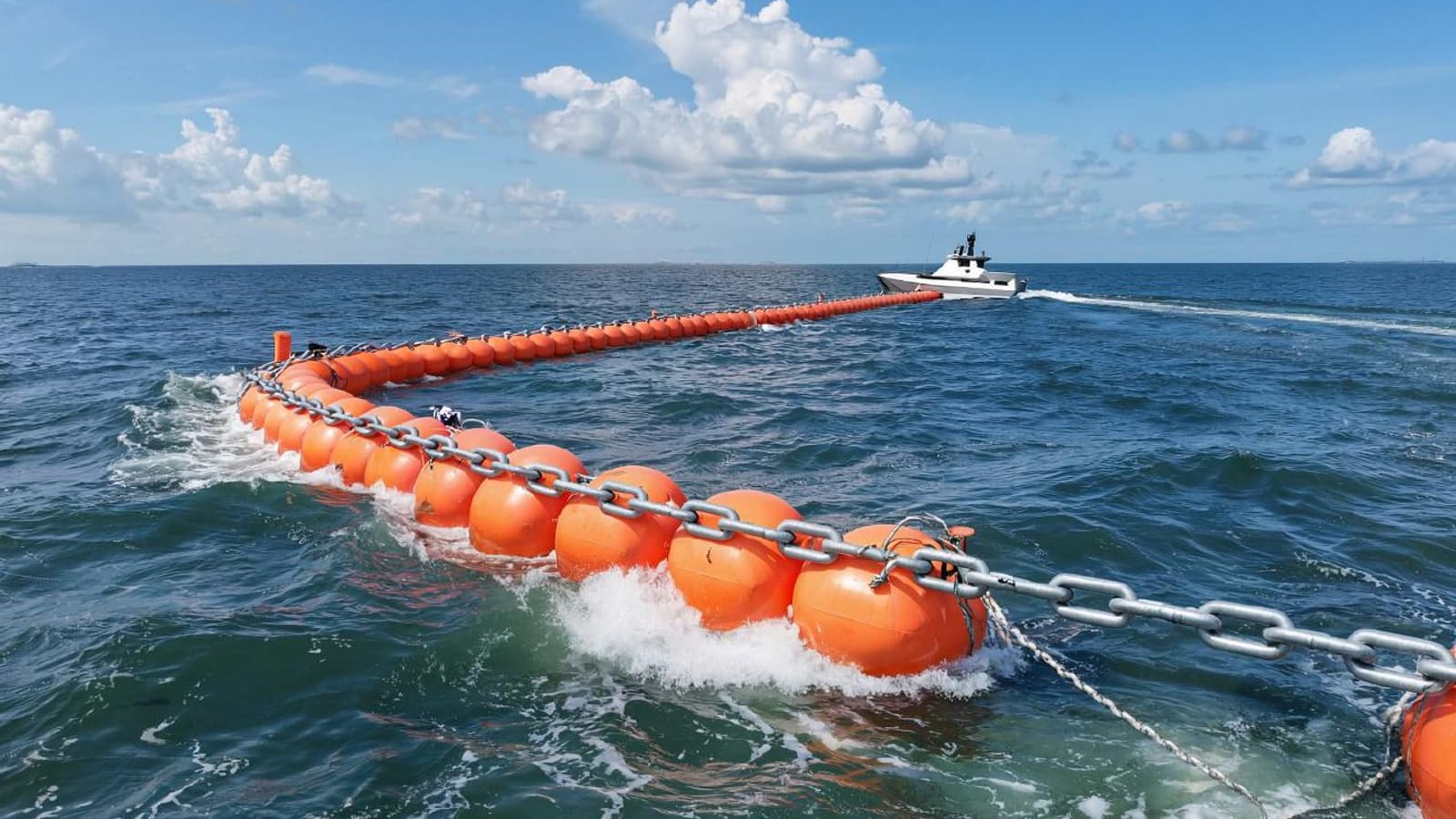

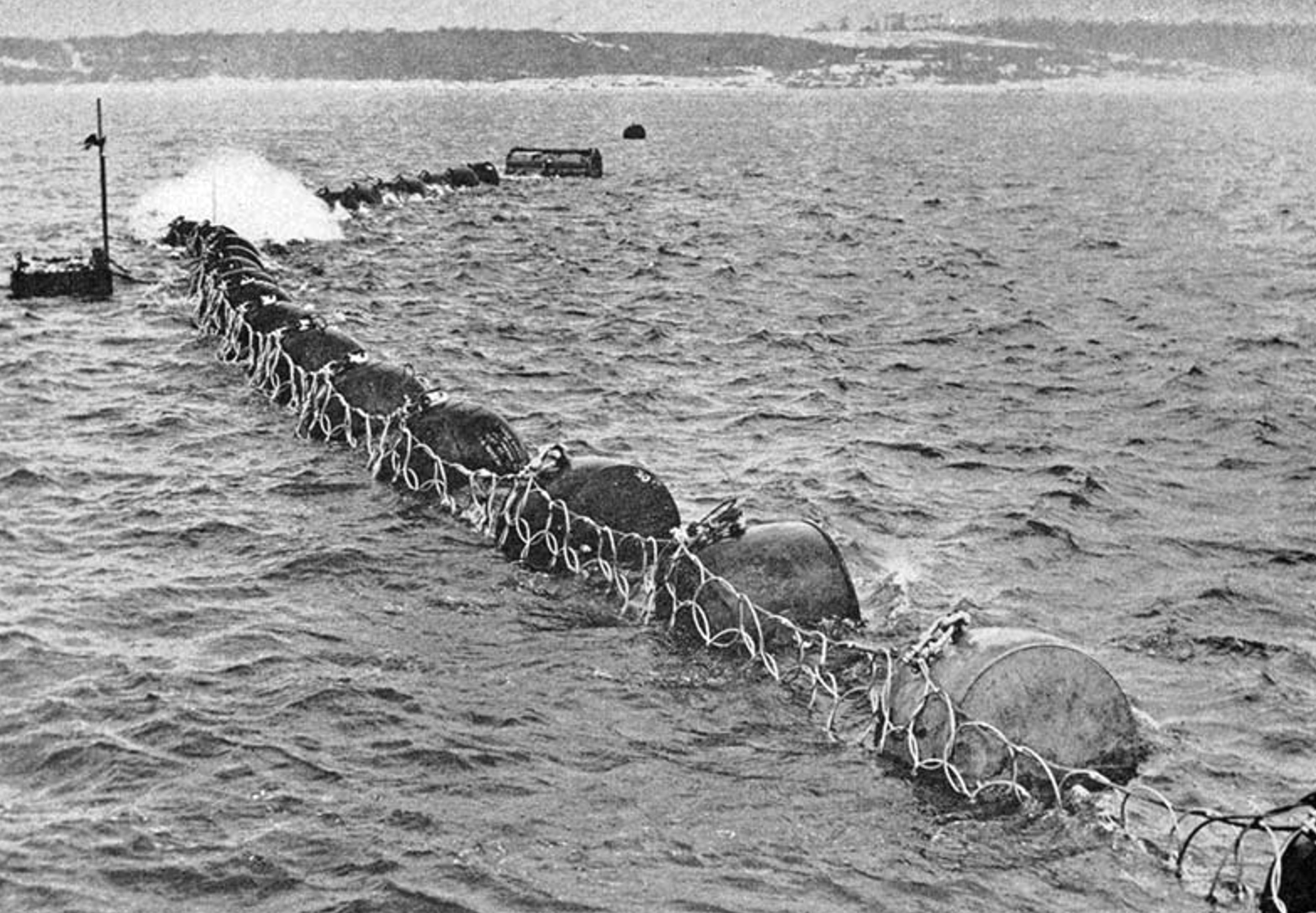







 RSS
RSS