ANDREW NEIL: Trump’s been handed a Fifa ‘peace prize’ and boasts of ending foreign wars. But what real Americans care about is the soaring price of everything
Suddenly, that most basic of political issues –the cost of living – has reasserted itself as the prime concern of American voters, threatening to undermine Donald Trump’s second term in the process.
The danger is all the greater because it’s not clear the President has a clue what to do about it. Or even understands how big a problem it is.
Often referred to as ‘the affordability problem’ in America, Trump denied it even existed in a long rant during one of his increasingly bizarre televised cabinet meetings on Tuesday.
‘Affordability is a hoax that was started by Democrats,’ he stated. ‘They caused the problems of pricing. They’re like scam artists… con men and women.’
The word ‘affordability’, he went on to claim, ‘doesn’t mean anything to anybody’. He blamed a ‘fake narrative’ for growing public concern about the cost of living.
The billionaires and plutocrats that populate so much of his cabinet all nodded in agreement, as they do at everything he says. They have neither the inclination nor the experience to contradict him. Like the President, they live a gilded existence in which ‘affordability’ is a far-off country.
But nobody else is buying it, not even Trump’s MAGA base. ‘The President can get away with all manner of outlandish claims,’ one White House aide tells me, ‘and nobody much cares. Many even believe him.
‘But not when it comes to affordability. The blue-collar families at MAGA’s core see the truth every week at the supermarket check-out.’
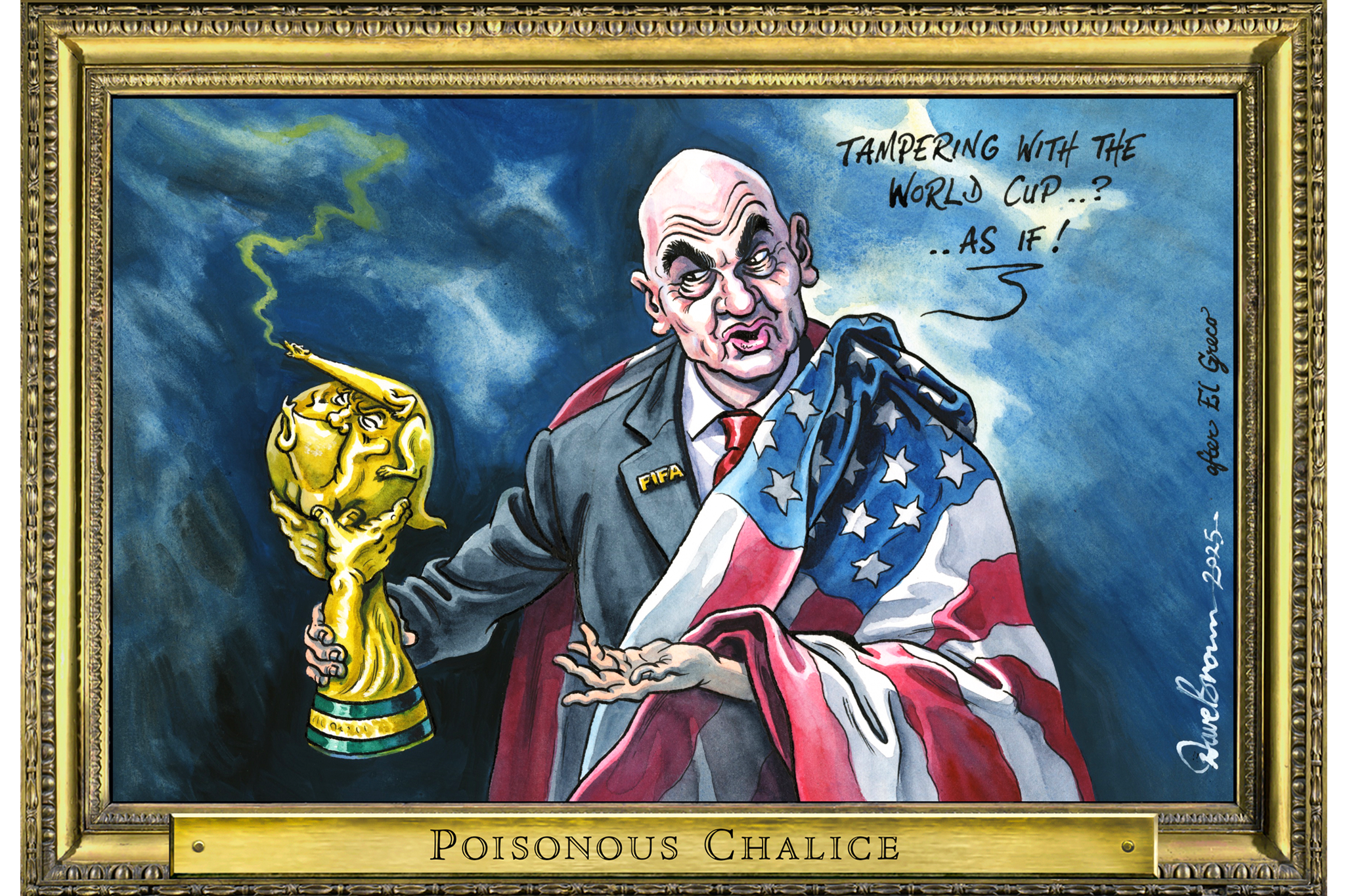
Donald Trump receiving the Fifa 'Peace Prize' during the group draw for the World Cup next summer
Almost 60 per cent of Americans say holidays, rent and mortgage payments are unaffordable, while 55 per cent claim they can’t afford their grocery bills
It’s already taking a formidable political toll on Trump. A poll this week by JL Partners for the Daily Mail saw his approval rating plummet from 55 per cent to 45 per cent in the past two months alone. Almost 60 per cent of Americans say holidays, rent and mortgage payments are unaffordable, while 55 per cent claim they can’t afford their grocery bills.
Other polls are closer to cataclysmic for the President. One for the Politico website published on Thursday found 46 per cent of Americans (including 37 per cent of 2024 Trump voters) consider the cost of living the worst they’ve ever seen it, with 46 per cent directly blaming Trump.
A Gallup poll puts his overall approval at only 36 per cent, with 60 per cent disapproving. Only 32 per cent approve of his response to the rising cost of living. A recent survey for CNN showed 27 per cent believe his policies are improving the economy.
Trump, of course, continues to blame the Democrats for rising prices. But voters are now far more inclined to blame Trump and the Republicans (by a margin of 20 points).
No surprise in that – because the facts are against him. During his cabinet meeting he claimed grocery prices were falling. They’re not. All the big price increases during the Biden years are now baked in – overall, grocery prices are up 30 per cent on 2020. Yet grocery bills are still rising by 2.7 per cent on the year.
Some traditional American food staples are rising by much more. Beef is up 15 per cent year on year, coffee 21 per cent and eggs 11 per cent. The hardship is obviously greatest for poorer families, many of whom voted for Trump and who have to devote 30 per cent of their income to putting food on the table.
Yet Trump claims to have ‘stopped inflation in its tracks’. He hasn’t. He inherited a 3 per cent inflation rate on taking office in January. Inflation is still 3 per cent. At one stage this year it looked like it was coming down. His obsession with tariffs pushed it back up again.
He moans that he inherited the worst inflation of all time. He didn’t. It was, as I’ve said, 3 per cent. Even the Biden-era inflation peak of 9.1 per cent in June 2022, bad as it was, isn’t close to an all-time post-war high.
One for the Politico website published on Thursday found 46 per cent of Americans (including 37 per cent of 2024 Trump voters) consider the cost of living the worst they’ve ever seen it, with 46 per cent directly blaming Trump.
The big worry for many American households in the New Year is healthcare insurance premiums. Those who insure via the various Obamacare health plans face huge spikes in premiums in 2026 as subsidies introduced during the pandemic are withdrawn. More than 24 million people will be affected, 75 per cent of them in states Trump won last November. Some millions will be left uninsured, adding to the 27 million who currently don’t have any kind of health insurance.
The political consequences for Trump and the Republicans look dire. In what in Britain we’d call a by-election this week, in a rock-solid Republican congressional district in Tennessee, we witnessed a sign of things to come.
Trump won it by 20 points last November and, while the Republicans held on to it, they did so with a much-reduced lead of nine points, even though the Democrats had fielded Left-wing activist Aftyn Behn, who was wholly out of kilter with the state’s conservative political culture.
Even Trump’s own pollster, Tony Fabrizio, admitted to House Republicans in Washington on Wednesday that the win had been narrow because of insufficient Republican focus on affordability. Yet Trump sent out his White House press secretary to double down on how it was all just a Democratic media ‘narrative’.
It’s all a far cry from Candidate Trump who, during last year’s presidential campaign, posed as the champion of working families, even vowing to ‘make America affordable again’.
Now, the self-styled champion of lower-paid Americans has morphed into a US version of Marie Antoinette, at one stage cutting off food stamps for the poor as he announced plans to tack a huge gaudy ballroom on to the White House.
The more the President feigns unconcern, the more MAGA worries. Even Vice President JD Vance, the man tipped to inherit Trump’s mantle, has felt the need to say: ‘We get it and we hear you.’ But he went on to blame Biden, which even MAGA true believers are beginning to doubt.
Trump plans to tour battleground states to denounce the ‘Democratic hoax’ and insist prices are ‘substantially’ down. That will be heavy going for him. And long before Vance can properly assess his chances in the 2028 presidential election, Republicans have to get through next November’s mid-term elections. The omens are far from propitious.
There have been six ‘special’ elections so far this year in America in which the average swing has been 15 points to the Democrats. In every race, from the contests to be governor in Virginia and New Jersey to the one for mayor of New York, moderate and radical Democrats alike won big time by campaigning on affordability. A swing of anything like 15 per cent next November would win the Democrats over 40 extra seats in the House of Representatives. The current Republican majority is three. The Democrats would have a substantial working majority in the House.
Wrestling the Senate from the Republicans is a much taller order. But if the Trump administration continues to deteriorate it can’t be ruled out.
Second-term presidents are inclined to look abroad for their legacy. But even foreign shores offer Trump little solace.
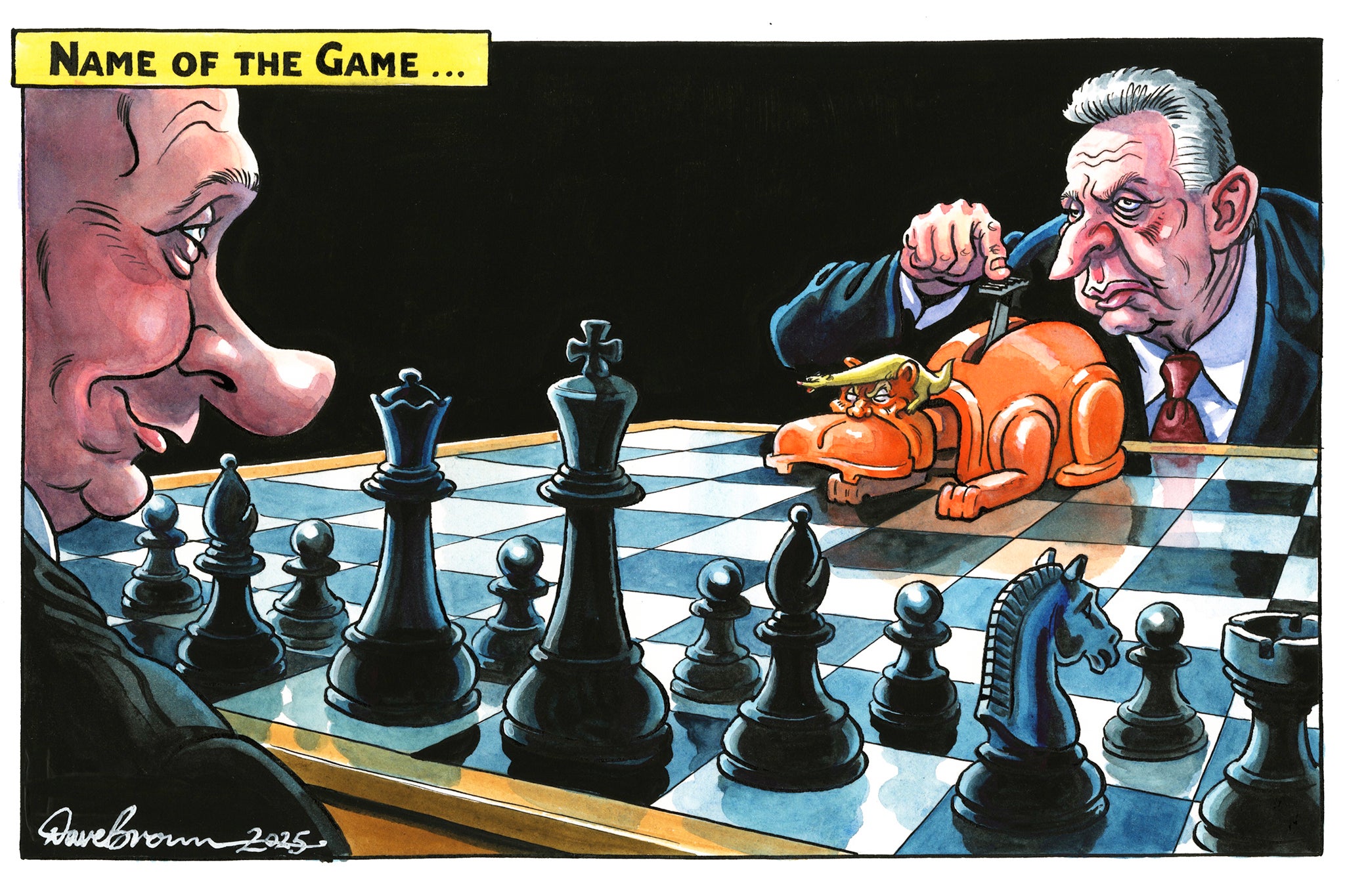
There is no peace in Gaza, nor in Ukraine, where he’s proved to be President Putin’s patsy, more than once.
His boast of ending eight wars includes two – Egypt-Ethiopia and Serbia-Kosovo – that have not happened during his presidency and one – in the eastern Democratic Republic of Congo – that is still ongoing.
Trump has, at times, been a breath of fresh air in foreign relations. But he is clearly no Henry Kissinger.
Now Trump’s blind spot when it comes to the crucial matter of affordability threatens to undermine the populist project which has, until now, transformed the Republicans into the party of blue-collar America.
Just as Boris Johnson threw away the transformative power of a similar populist project in Britain after his landslide victory in 2019, propelled by the same sort of blue-collar voter, so Trump is in grave danger of repeating Johnson’s mistake.
And, like Johnson, for reasons that could be easily avoided but for arrogance and indifference. What a waste.
Trump wants to recreate a white America that never existed.
The persecution of brown people and mass deportations will not create the white country of far-right fantasy.
As Donald Trump deteriorates and his grasp on power fades, he has been lashing out furiously at female journalists and ethnic groups, most recently Somali Americans. His insults land because of their animosity and his power, not their accuracy. Likewise, his administration’s attacks on immigrants are sloppy and driven by lies. It’s strikingly clear that the target is not individuals with criminal records. It’s anyone and everyone guilty of being brown. Native Americans with tribal identification cards, US citizens, people doing crucial work from construction to nursing, military veterans, college students, people sleeping in their own beds, small children: all kinds of residents of this country are under attack.
“ICE raids are cruel, inhumane, and do nothing to serve public safety,” declares Zohran Mamdani, the New York City mayor-elect. Masked thugs smashing car windows and dragging parents away from their babies, terrorizing whole swathes of the population, and interfering with the ability of schools and businesses to function does the opposite. The rounds of targeted hatred by Trump and his minions – for people from Haiti during the 2024 campaign, for people from Venezuela this spring and summer, and most recently for people from Somalia – rely on defamatory lies and insults, because the facts about these groups don’t support the hate.
This terrorizing and demonizing pretends to be in service of recreating a white America that never existed. The US when white supremacists like Trump were young was whiter, but this was never a white country. In 1776, the 13 colonies that became the United States included a significant percentage of Black and Indigenous people (some southern states were a third or more Black). When the US annexed Texas in 1844 and then in 1848 took Mexico’s whole northern half, a Spanish-speaking population was already settled across parts of what’s now the south-west and California. The first African Muslim in what is now the United States came in a Spanish expedition almost a century before the Mayflower brought its fanatical Puritans to the shores of Massachusetts in 1620.
The persecution of huge numbers of brown people and even the mass deportations will not create the white country of far-right fantasy. Los Angeles, for example is an almost 50% Latino city, and despite the ICE and border patrol outrages, arrests, imprisonments and deportations, it remains so. The city’s very name is Spanish, a reminder of who was here first. All the hatred, all the persecution, seems like the panic of racists pretending they can stop the future of this country no longer being majority white through sheer cruelty.
It’s coupled with an attack on reproductive rights that is sometimes openly intended to make white women have more babies (the US has a below-replacement rate birthrate, which is less impactful than in many other countries facing the same decline, because a young, hard-working immigrant workforce keeps things going). Of course, rather than offering the support that might make parenthood less grueling, they are attempting to realize their goals by punitive means. And it’s not working. Margaret Talbot of the New Yorker writes that JD Vance’s reproductive politics – and insults to childless women – amount to pronatalism, which “typically combines concerns about falling birth rates with anti-immigration and anti-feminist ideas”.
Likewise, CNN reports: “Reproductive rights groups and other advocacy organizations say these efforts to buttress the birth rate don’t make up for broader administration priorities aimed at cutting federal programs such as Medicaid, its related Children’s Health Insurance Program, and other initiatives that support women and children. The pro-family focus, they say, isn’t just about boosting procreation. Instead, they say, it’s being weaponized to push a conservative agenda that threatens women’s health, reproductive rights, and labor force participation.”
The anti-immigration and pronatalist policies add up to fantasies of redirecting the demographic future of this country. Both amount to, in the end, dim-witted bullying by haters inadvertently demonstrating that their claims to superiority have to be based on race and gender, because otherwise they’re incoherent idiots.
A lot of the Trump administration’s justifications don’t line up with realities and results. The attacks in the southern Caribbean target small boats not confirmed to be carrying drugs and not capable of reaching the US. Venezuela is not involved in any meaningful way in trafficking fentanyl and much less involved in cocaine trafficking than other South American countries.
“We reject the disastrous ‘climate change’ and ‘Net Zero’ ideologies,” says a new White House document. Trump and company are sentimentally committed to fossil fuel, especially coal, and are forcing various US locales to waste money on this outdated and toxic fuel while sabotaging cheaper, cleaner renewable energy. Robert F Kennedy Jr, the US health secretary, is sabotaging public health while promoting anti-scientific schemes to control Americans’ diet.
The premise of the attacks on immigrants is that people of color who were not born in the US are intruders and threats, but from Los Angeles to Charlotte, North Carolina, and Chicago to Portland to New York, it’s the Trump administration’s violent foot soldiers with ICE and the border patrol that locals perceive as unwelcome threats and violent invaders. There is no more dramatic sign of the rejection of Trumpism than the thousands upon thousands organizing, showing up, risking bodily safety, arrest and felony charges to defend their neighbors. City after city has risen up to defend its own. All of Trump’s insults cannot change that.
...
Цитата:
‘Mouthpieces for Trump’: inside the rightwing takeover of the Pentagon press corps.
Pentagon press passes once held by credentialed journalists are now in the hands of rightwing pundits and Trump allies.
Being a member of the Pentagon press corps was once one of the more prestigious assignments in US journalism, a position reserved for heavy hitters from venerable newspapers and news channels, reporters at the peak of their powers.
Not any more. A press conference last week – held at a crucial time for a Pentagon embroiled in scandal – was instead attended by more than a dozen rightwing activists, with the government being held to account by a close ally of Donald Trump, an employee at Turning Point USA and someone from a pillow salesman’s nascent media company.
Almost all credentialed reporters from traditional media companies surrendered their Pentagon press passes in October, rather than sign a 21-page Pentagon document that set restrictions on journalistic activities.
Those constraints include requiring news organizations to pledge they will not obtain unauthorized material – in effect limiting journalists to reporting on officially provided information – and agreeing to limits on journalists entering certain parts of the Pentagon.
Following that walkout, the Pentagon issued passes and access to dozens of rightwing media figures and organizations who agreed to the strict rules, including Laura Loomer, a Trump confidante who has described herself as a “proud Islamophobe”; LindellTV, an online streaming channel founded by Mike Lindell, a conspiracy theorist and CEO of MyPillow; and Matt Gaetz, a disgraced former congressman turned host at One America News Network.
The lack of serious media figures scrutinizing the Pentagon – last year Loomer filmed herself eating dog food for an advert, while LindellTV appears to exist primarily to push Lindell’s disproven claims of election fraud – comes at a time when there is a particular need for journalists to provide proper scrutiny of a Pentagon beset by controversy.
On Thursday, an independent report published by the Pentagon’s office of inspector general found that the defense secretary, Pete Hegseth, “created a risk to operational security that could have resulted in failed US mission objectives and potential harm to US pilots” when he used the chat app Signal to discuss details of an operation in Yemen. A journalist from the Atlantic was included in the Signal group chat where Hegseth shared the information – the debacle led to calls for Hegseth’s resignation. Separately, the Pentagon continues to face questions over the double strike conducted on an alleged drug boat in the Caribbean.
The new press corps seems ill-positioned to ask those questions, or to hold the government to account. Loomer and Gaetz are hyper-partisan rightwing commentators and avid supporters of the Trump administration; LindellTV and other organizations which signed the agreement, like Turning Point USA, the Daily Signal, the Gateway Pundit and the Post Millennial, are self-professed conservative outlets.
“It’s incredibly problematic. We’re talking about severely limited access to the already secretive military-industrial complex,” said Carole-Anne Morris, a journalism professor at the University of North Carolina at Greensboro.
“I have a hard time assigning any credibility whatsoever to any media outlet or journalist who would agree to the terms of the Pentagon’s new press policy. Essentially, these folks will only be able to parrot information they’re spoon-fed by some media liaison in the Pentagon. They can’t seek out information on their own. Doesn’t sound like journalism to me. Here’s what it actually is: a group of alt-right outlets who are vying to be mouthpieces and apologists for this administration.”
The New York Times sued the Pentagon and Hegseth on Thursday, alleging that the ban “seeks to restrict journalists’ ability to do what journalists have always done – ask questions of government employees and gather information to report stories that take the public beyond official pronouncements”, and experts have warned that the government is violating the first amendment right to free speech.
“Everything about the press and the way it works requires independence from the government, so anything that restricts what you can say, what you can do, anything that’s about how you do your job is just unacceptable,” said Gregg Leslie, executive director of the First Amendment Clinic, at Arizona State University’s Sandra Day O’Connor College of Law.
“It’s just a fundamental violation of the first amendment. I mean, you can make the argument that nobody has the right to get into the Pentagon, and the same is true of the White House, but once they start making decisions that discriminate against you based on how you’re going to cover something or what your viewpoint is, that’s going to become completely unacceptable.”
As criticism continued this week, the Pentagon issued its own, school newspaper-style report on Wednesday, chirpily hailing a “whirlwind of activity” for its staff, who it said had completed three days of “onboarding” for the new press corps. That new makeup consists of more than 70 independent journalists, bloggers and “social media influencers”, the report said.
“This ‘new media’ operates differently than traditional media, and Pentagon leadership believes it is better equipped to inform a broader swath of the American public about what goes on inside the department,” Kingsley Wilson, the Pentagon’s press secretary, said in the release.
Of the new, almost exclusively rightwing press corps, Wilson said: “We want to make sure that we’re reaching as many Americans as possible.”
he cold was brutal and so were the gangsters. It was the first – and worse, only – day of shooting, and when cinematographer Julio Macat threaded some film into his camera, it was so cold that the film snapped. The gangsters flitted around menacingly, fedoras and machine guns at the ready.
Macat was hoping to make a movie that was frightening and strange. “The goal,” he says, “was to scare a kid.” And so, even though it was 1990, he chose to shoot the noir like it was the 40s, with black and white film, fog filters on the camera lenses, and an intense, old-fashioned lighting setup to cast deep shadows on the set.
Macat needed to do all of this to make the perfect family Christmas film.
“It’s amazing to me how a lot of people don’t know that it’s not a real movie,” says Macat, almost 40 years later. He is talking – of course – about Angels with Filthy Souls, the film that sits inside the festive classic Home Alone. Our hero Kevin McCallister (Macaulay Culkin) watches the gangster flick wide-eyed when he’s left – you guessed it – home alone, and the fake film’s action sequences inspire Kevin’s later capers.
But Angels with Filthy Souls ended up looking so realistic that audiences – including, for his “entire childhood”, the actor Seth Rogen – thought it was a real golden oldie.
How do you make a film-inside-a-film? They are a fairly frequent but tragically understudied phenomenon – the Wikipedia entry, “List of films featuring fictional films” collates about 120 of them, but there are actually hundreds more. “They’re all great in their own way,” says Lynn Fisher, the 40-year-old creator of the speciality website “Nestflix”, which catalogues more than 1,000 stories nested in other stories. “I especially appreciate ones that obviously took a lot of effort to create. It’s the small details that really make it.”
Fisher created Nestflix during a bout of unemployment in 2021 – she crafted the site to look like a streaming service. Ever since she learned that Angels with Filthy Souls wasn’t a real movie, the Arizona-based web designer has been fascinated by what she calls “nested films”. Her other favourites are teen drama The Pink Opaque from the psychological horror I Saw the TV Glow and the spy biopic Austinpussy from Austin Powers in Goldmember.
Strangely, Home Alone isn’t the only festive film to host a fake film – it’s a fairly common occurrence. There’s Turbo Man: The Motion Picture in Arnold Schwarzenegger’s Jingle All the Way and The Night the Reindeer Died in Scrooged, not to mention the trailer for action film Deception in The Holiday.
“I think they ground things,” says Macat, “it makes a movie more believable.” It makes sense that festive films need to be grounded with a bit of (fake) reality – it’s a speedy way to show the audience that fantastical Christmas magic is actually occurring in the real world. The Holiday’s production designer Jon Hutman has another theory. “Usually when there’s a film within a film the characters come to recognise that they are within the movie of their own lives,” he says, “and they have to rise, on some level, to being the hero of their own stories.”
Audiences see less than 30 seconds of Deception in The Holiday, but nonetheless numerous online commenters wish the film was real. The action movie follows “your average 20-year-old” Rebecca Green (Lindsay Lohan), a waitress who is left something mysterious in her estranged father’s will. There are gunshots, explosions and steamy kisses.
“You try to make it good without making it distracting,” Hutman says of making a film-within-a-film. As the set designer on The Holiday, Hutman was focused on bringing to life the now famous houses in the movie – an adorable English cottage and sprawling LA mansion. In comparison, he had to make the cafe in Deception understated and undistracting, while action sequences on an industrial-looking staircase and behind a chain-link fence set the tone with familiar tropey visuals. “You want it to be beautiful and clear and hopefully a little bit elegant and simple,” Hutman says.
While Hutman admits that movies-within-movies can often be an “afterthought” for production, he says he personally treats these scenes the same as any others. Macat, too, certainly handled Angels with Filthy Souls like it was a real blockbuster – even though he had to shoot it in just one day, the final prep day before principal filming on Home Alone began.
“You’re scared shitless, because it’s the first thing that the studio will see,” Macat says. It was his first movie as director of photography, and he battled impostor syndrome on set, particularly because he hadn’t used black and white film since film school. Nonetheless, when shooting started: “I could tell that we were doing something different and interesting.”
“It was obviously inspired by Angels with Dirty Faces, and that sort of gangster type movie from 1938,” Macat explains. Because the old school film that Macat was shooting on wasn’t as light-sensitive as modern stuff, he required five times the amount of lighting – he also put some black netting over the lens to make the shots seem more vintage. Then there were smoke machines and a vintage Tommy gun used to pump the gangster “Snakes” full of lead. “It was all with the intent to shoot something that a kid hadn’t seen before that would scare the pants off him when he’s watching it by himself.”
In 2006, cinematographer Baz Irvine was about to work with auteur Nicolas Roeg on the supernatural horror Puffball – but then he broke his arm in a snowboarding accident. “I had this idea that I was going to be this leading light in alternative indie cinema in the UK and Ireland,” Irvine says – but, with a plaster cast up to his shoulders, he had to pull out of Puffball and scrabble for less physically demanding work. That’s how he ended up on Mr Bean’s Holiday.
In Mr Bean’s Holiday, the titular Mr Bean wins a trip to Cannes. There, he watches – and ultimately interferes with – the premiere of arthouse film Playback Time, described as, “a film for all of us who hunger for truth, for all of us who cry out in pain”. Willem Dafoe plays actor-director Carson Clay in Mr Bean’s Holiday; Carson Clay plays a heartbroken detective in Playback Time. “I think Willem was completely baffled as to what was going on the whole time he was on the film,” Irvine laughs. “His scenes were so out of sync with each other and made no sense.”
Irvine says Playback Time was, “not just a film within a film, but a homage to so many genres and a love letter to French cinema.”. So, in a way, the cinematographer did get to work on an indie darling. We see Dafoe ruminate in a long opening shot as he rises up an escalator – later, he runs through various industrial-looking spaces and stares into the distance as a tear rolls down his cheek. Footage was shot around London’s ExCel centre and Irvine estimates that filming lasted three days. He swapped from regular spherical lenses to anamorphic lenses with “that classic widescreen Hollywood look” to give Playback Time a different vibe from the rest of the film.
“We just went to town on making something silly and fun and photographic,” Irvine says, “We were allowed to be indulgent.” The crew even had to crash the real Cannes festival to get shots for Playback Time’s premiere, walking the red carpet before the cast of a (real) Portuguese movie. “When you’re making a film, it’s quite gruelling. No matter how creative or brilliant it is, there is a monotony to the everyday,” Irvine says. “So it’s brilliant to be able to just suddenly put new lenses on, have a totally different aesthetic, and not worry so much.”
Цитата:
Fake films certainly aren’t going anywhere – in May, Apple TV renewed The Studio, a satirical show about a Hollywood honcho who makes movies such as Alphabet City (a 1970s crime drama) and Duhpocalypse! (a zombie/diarrhoea epic). The Holiday’s fake action film featured very real celebrities – James Franco starred alongside Lohan, as did the instantly recognisable trailer narrator Hal Douglas – and so too does The Studio. The show’s casting director Melissa Kostenbauder managed to secure Martin Scorsese for its pilot. “We felt so lucky he wanted to do it,” she told Vulture, “Everyone was excited he was even entertaining it to begin with.”
…
But, you might wonder, who exactly created and stars in The Studio? None other than Seth Rogen. Perhaps the revelation about Angels with Filthy Souls inspired the star to make his own nested films.
Firm fan Fisher believes films-in-films should achieve one of three things. The first is that the phoney film should feel real, even if it’s a joke – audiences should say: “I can’t believe that movie is fake.” The second is that the crew should’ve “put way more time into that than they needed to”, that the attention to detail should be remarkable in and of itself. And, “The third reaction you want,” Fisher says, “is for people to say, I wish that was real so I could watch it.”
Цитата:
Chef reveals how to cook the perfect roast potatoes this Christmas - and the common mistake that causes soggy spuds.
The humble roast potato is a special thing; crispy and golden on the outside, soft and fluffy on the inside, perfectly seasoned and dripping in fat.
Time and time again, the roastie has been voted Britons' favourite part of a roast dinner - and despite going up against turkey, stuffing and pigs in blankets on the souped-up Christmas table, it's still a winner among diners.
With so much riding on the perfect spud as Christmas Day cooks put their skills to the test, an expert has weighed in on how to make crowd-pleasing roasties - without any of the fuss.
Russ Goad, executive chef at M&S Food, has been testing recipes for most of his career. He describes testing and tweaking recipes as his 'bread and butter'.
Ahead of December 25, Russ has revealed his formula for roast potatoes that will impress everyone at the dinner table - plus the key step many people forget that will ensure crispy yet fluffy trimmings every single time.
Roast potatoes are consistently voted the most popular element of a roast dinner, so the pressure is on for Christmas Day cooks to make the perfect plate of crispy spuds for guests
THE PREP
Christmas is a busy period and most people hosting their loved ones on December 25 are short on time, to say the least.
But if you possibly can, Russ recommends taking 10 minutes ahead of time to write down your timings for different cookery elements on Christmas Day.
'Manage your oven timing,' he advised, noting how many different elements have to compete for oven space.
As for the variety of potatoes, Russ suggests Maris Piper or King Edward to create the best potatoes. If possible, find a selection which includes decent-sized potatoes and avoid any that are too small.
The fat is also an important element - although Russ notes much of this is down to personal preference. While he favours an animal fat such as goose or beef, lighter oils will also work well. He advises against an extra virgin olive oil with a strong peppery flavour.
On the day, peel and chop your potatoes before dropping them into cold water. Be careful not to cut the potatoes too small, or else they will take on too much water during the parboiling process and become mushy.
If you're making a large batch and some spuds have been sitting in the water for a long time before you're ready to bring them to the boil, drain them off and refill the pan with fresh cold water to get rid of the starch.
Russ notes that most people are working with one oven and limited space for all elements. But if possible, he says the best oven temperature for roasties is between 180C and 190C.
THE METHOD
When you're ready to cook your roasties, bring them to the boil on the stove, ensuring the water is cold and seasoned with salt when you start the process.
According to Russ, a 'gentle simmer' is what you're looking for.
'How long you cook them for depends on the size, but it can be anything from eight to 14 minutes,' he explained - adding it's less about the timing and more about testing the potato to determine if it's par-boiled enough.
'Take a small, sharp knife and pierce the potato. You want a bit more resistance in the centre of it, but it's perfect when it's just starting to get a bit crumbly.'
The next step, according to Russ, is crucial - and one many people neglect in a bid to get everything into the oven.
'A lot of people will drain their potatoes and put them straight into the sizzling fat and into the oven,' Russ said.
'But what you need to do is drain them, lay them out onto a tray and leave them for at least 30 minutes before putting them into the oven. Let the steam come off them.'
He explained that, when people put their potatoes straight into the oven, the steam coming off them goes into the oven too and creates a humid heat. The humidity prevents the potatoes from crisping up.
'Leaving them to steam first will help them become lighter and fluffier,' he explained, adding that you could leave them for up to 90 minutes if you needed.
Meanwhile, heat up your chosen cooking fat on a shallow oven tray in the oven for about 10 minutes.
Another common mistake people make when roasting spuds is rushing to get them into the oven without taking the time to coat them in cooking fat.
'When you put the potatoes onto the tray, don't rush it. People worry about the fat cooling down, but it doesn't matter. The most important thing is to coat every side of the potatoes in the fat before putting them into the oven. Take your time.'
Coating all sides of the spud in cooking fat is essential to ensure the potato roasts, rather than bakes. 'If there's no fat, it will form a crust and become dry,' he explained.
Then it's time to put the spuds in the oven - for about 30 minutes in the first instance, before taking them out to turn them.
'Don't be tempted to turn them too soon,' he warned.
Russ suggests the best time to add any herbs or garlic is during the turn. He recommends sticking to 'woody' herbs like rosemary and thyme, but sage would work too.
If you're adding garlic to the tray, it should be bulbs or whole cloves with the skin on. Crushed or chopped garlic will burn.
After turning the potatoes and adding any extra flavours, put the spuds back into the oven for another 20-25 minutes.
Russ's final tip is to crack the oven door open once or twice during the roasting process to allow any excess steam escape.
He recommends seasoning them once they have been fully roasted - but you could add seasoning earlier in the process if you wish.
Ideally, roasties should be served as soon as possible once they're cooked. However, if you need to hold off, Russ says they can be refreshed 'really easily' by popping them back into the oven.
Crucially, Russ urges: 'If it all goes wrong, you're still spending Christmas with your loved ones. It doesn't matter that much.'
_________________
С интересом и понятными ожиданиями, Dimitriy.
Несколько украинских предпринимателей в частном порядке утверждают, что распознали некоторые записи, уже имеющиеся в открытых базах данных, что оставляет открытой возможность того, что данные представляют собой комбинацию восстановленных данных, старых архивов и фрагментов, которые были фактически украдены.
В настоящее время нет никаких доказательств, подтверждающих проникновение россиян на сервер BRAVE1. Однако психологический эффект весьма реален. Украинское сообщество пользователей беспилотников теперь рассматривает эту утечку как серьёзный риск.
Killnet утверждает, что удалила исходные базы данных, сделав их безвозвратно недоступными. Опрошенные эксперты считают это утверждение маловероятным. BRAVE1 и ВВС США полагаются на резервные и регулярно проверяемые облачные инфраструктуры.
Если российская версия верна, это станет серьёзным ударом для Алексея Выскуба. Заместитель министра курирует стратегическое финансирование военных инноваций, курирует BRAVE1 и отслеживает проекты, поддерживаемые United24. Взлом его компьютера может открыть доступ к прототипам в разработке, каналам финансирования и важным проектам, всё ещё находящимся на стадии инкубации.
Даже если это неопределённо, операция является частью известной стратегии. Российские спецслужбы с 2023 года активизируют атаки на украинские стартапы, занимающиеся разработкой дронов, их облачные серверы и внутренние сети. Цель всегда одна: перегрузить, нарушить и ослабить инновационный потенциал. На этот раз Killnet играет на другом поле: на восприятии. Смысл не только в краже. Он также в том, чтобы посеять панику в украинской военной инновационной экосистеме.
Целевые платформы продолжают работать. Но в мастерских и технологических центрах нервы на пределе. Руководитель одного украинского стартапа, занимающегося разработкой дронов FPV, прямо подытожил ситуацию: в этой войне украденный файл может убить не меньше, чем ракета.
Цитата:
На Западе опубликовали расследование относительно крупнейшей утечки украинских данных за последнее время. Хакерское сообщество Killnet, известная фигура в российских кибероперациях, уже несколько дней утверждает, что заполучило то, что украинские источники называют наихудшим сценарием. Хакеры утверждают, что взломали учетные данные заместителя министра Алексея Выскуба, ключевой фигуры в Министерстве цифровой трансформации, возглавляемом Михаилом Федоровым. На Западе опасаются, что если это окажется правдой, это может дать российским спецслужбам прямой доступ к самому сердцу украинской системы военных инноваций и технологий.
В сообщениях, опубликованных в Telegram, хакеры описывают взлом, который якобы позволил им проследить путь к оборонному кластеру BRAVE1 и Украинскому стартап-фонду — двум центральным структурам масштабной кампании военной модернизации, запущенной Киевом в 2022 году. Они утверждают, что похитили огромные объемы данных и составили подробную карту украинской экосистемы беспилотников — разветвленной сети из более чем 1500 компаний, объединенных вокруг военных задач.
Всплыли несколько образцов документов, связанных с этой утечкой. Изученный контент содержит конфиденциальную информацию, включая технические фрагменты, промышленные метаданные, отчёты об испытаниях и GPS-координаты, связанные с некоторыми чувствительными производственными инфраструктурами. Эти данные, даже если они неполные, подтверждают, что у хакеров действительно есть реальные и потенциально пригодные для использования данные, помимо дезинформационной риторики, которая часто сопровождает их операции.
В опубликованной Killnet выборке упоминаются несколько известных в отрасли компаний: Robokrok, возглавляемый Вадимом Сазлияном; Burevii, стартап, специализирующийся на дронах, возглавляемый Виктором Долготяевым; и Skif Robotics, основанный Андреем Санько. В опубликованных фрагментах содержатся внутренние данные всех этих компаний. Отсутствие официального ответа никого не успокаивает. В мастерских, инкубаторах и барах Киева и Львова, которые часто посещают украинские операторы дронов, царит шок. Многие задаются вопросом о точном характере утекших файлов и времени их создания. Пока что россияне обходятся фрагментами. Но иногда и одного фрагмента достаточно.
Несколько технических фрагментов, представленных хакерами, касаются системы борьбы с БЛА Piranha AVD 360, широко используемой на передовой. В таблицах представлены конфиденциальные данные, включая частоты передачи и эксплуатационные параметры, которые украинские инженеры обычно предпочитают не передавать с защищённого сервера. В сфере радиоэлектронной борьбы такая информация ценнее оружия. Имея в распоряжении несколько диапазонов частот передачи, можно разработать целенаправленные меры противодействия или просто заглушить систему. Даже частичная утечка имеет стратегические последствия. Украинская промышленность это понимает. Это понимают и в Москве.
Хакеры также утверждают, что располагают GPS-координатами нескольких объектов, используемых для производства или обслуживания БЛА. Эти данные сразу же перекликаются с многочисленными ударами России по цехам, ангарам и испытательным центрам. Отрасль получила это сообщение. Небольшие организации, где секретность порой основана на анонимности их местонахождения, опасаются повышения точности российских карт. Для некоторых одного лишь подозрения было достаточно, чтобы спровоцировать экстренное переселение.
Источник в СБУ, участвующий в борьбе с российскими кибероперациями, сообщил, что списки, полученные в результате предполагаемой утечки, теперь продаются по закрытым каналам за несколько тысяч долларов, а затем широко распространяются в России. Файлы включают названия украинских компаний, их адреса электронной почты, геолокации и сферы деятельности. Такая база данных, если она подлинная, представляет собой значительный актив для российской военной разведки.
UK will stay ahead of Putin to ‘secure the underwater battle space’, Royal Navy chief says
It comes days after the foreign secretary warned that Putin represents ‘an active threat to Britain’s citizens, our security and our prosperity’
General Sir Gwyn Jenkins has been named as the new head of the Royal Navy (Ministry of Defence/PA) (PA Media)
The Royal Navy will “stay ahead” of Vladimir Putin to “secure the underwater battle space”, the first sea lord has said as the government announces plans to use AI to track and deter Russian submarines.
The hybrid naval force, named Atlantic Bastion, will combine autonomous vehicles and AI with warships and aircraft as part of a new multi-million-pound hi-tech force to protect Britain’s undersea cables and pipelines.
Speaking on a visit to HM Naval Base Portsmouth over the weekend, Sir Gwyn Jenkins admitted the Royal Navy is “stretched”, but outlined plans to “prove our technology is better than theirs”.
Announcing the plans, defence secretary John Healey said it would be a “highly advanced hybrid fighting force to detect, deter and defeat those who threaten us”.
The move comes after cables in the Baltic Sea were reported to have been damaged recently and UK defence intelligence has identified that Russia is modernising its fleet to target undersea cables and pipelines.
Asked if the Royal Navy was operating at a disadvantage to the Russians in the North Atlantic, General Sir Gwyn told The Times: “We are definitely in a competition in the Atlantic.
“If you look at the Russian capabilities out of the Northern Fleet, their funding has continued to flow despite the war in Ukraine and they consider it an area of expertise and advantage for them
“We are in a competition to stay ahead. I wouldn’t say we are behind, but I would say we are stretched.”
And giving a speech on Monday at the International Sea Power Conference, he will say Atlantic Bastion is “our bold new approach to secure the underwater battle space against a modernising Russia”.
“We are a Navy that thrives when it is allowed to adapt. To evolve. We have never stood still — because the threats never do”, he will say.
“We’ve already made rapid and significant progress with delivering Atlantic Bastion. A force that keeps us secure at home and strong abroad.”
Last month, the defence secretary was forced to issue a stark warning to Vladimir Putin after a Russian spy ship operating on the edge of UK waters directed lasers at RAF pilots.
Meanwhile, the foreign secretary, Yvette Cooper, this week warned that Putin represents “an active threat to Britain’s citizens, our security and our prosperity” after a major inquiry into the Salisbury novichok poisonings concluded that the Russian president ordered the attempted assassination of Sergei Skripal as a “public demonstration of Russian power”.
Subsea infrastructure is the lifeblood of the UK’s connectivity, carrying 99 per cent of international telecommunications data and vital energy supplies such as electricity, oil and gas.
Speaking during the visit to the naval base, Mr Healey said: “We know what Putin is doing. We know what Putin is developing.
“And we’ve seen in recent weeks, for example, their spy ship, Yantar, in and out of UK waters, and we’re able to find them, whether they are on the surface or underwater.
“We’re able to find them, track them, and, if necessary, we are ready with allies to act to deter them.”
The announcement comes as Volodymyr Zelensky prepares to visit London for talks on peace proposals, with cabinet minister Pat McFadden on Sunday warning that Ukraine faces a “pivotal” moment in the war with Russia.
The Ukrainian president will meet Sir Keir Starmer in Downing Street on Monday, along with French president Emmanuel Macron and German chancellor Friedrich Merz, amid continued talks between Ukrainian and US officials on a Washington-backed plan to end the war.
Defence Secretary John Healey delivering a speech on how the UK’s defence industry is delivering growth and national renewal across the UK (Stefan Rousseau/PA) (PA Wire)
Mr McFadden said Ukraine’s security and self-determination would be “at the heart” of the leaders’ discussions, telling Sky News’ Sunday Morning with Trevor Phillips: “This is a really pivotal moment now. Everybody wants the war to come to an end, but they want it to come to an end in a way that gives Ukraine that freedom of choice in the future.
“So, that means not just an end to the war but also security guarantees for Ukraine in the future, and not a completely toothless organisation, which is unable to decide its future.”
The UK has consistently pushed for any peace deal to include security guarantees for Ukraine, both from the US and in the form of the British and French-led “coalition of the willing”.
Atlantic Bastion will involve the development and testing of state-of-the-art anti-submarine sensor technology.
A MoD spokesperson said: “Atlantic Bastion will create an advanced hybrid naval force to defend the UK and Nato allies against evolving threats.
“It will enable the UK to find, track and, if required, act against adversaries with unprecedented effectiveness across vast areas of ocean.”
Mr Healey added: “People should be in no doubt of the new threats facing the UK and our allies under the sea, where adversaries are targeting infrastructure that is so critical to our way of life.
“This new era of threat demands a new era for defence, and we must rapidly innovate at a wartime pace to maintain the battlefield edge as we deliver on the strategic defence review (SDR).
“Our pioneering Atlantic Bastion programme is a blueprint for the future of the Royal Navy.
“It combines the latest autonomous and AI technologies with world-class warships and aircraft to create a highly advanced hybrid fighting force to detect, deter and defeat those who threaten us.”
The project has been launched with £14m of MoD and industry early investment of £14m for testing and development, with 26 firms from the UK and Europe having submitted proposals.
It comes after the government earlier this week announced that the UK and Norway are poised to sign a landmark defence pact, establishing a combined naval fleet specifically designed to track Russian submarines across the North Atlantic.
The MoD spokesperson said: “Atlantic Bastion will see ships, submarines, aircraft and unmanned vessels connected through AI-powered acoustic detection technology and integrated into a digital targeting web – a pioneering network of weapons systems that allow battlefield decisions for targeting enemy threats to be made and executed faster.”
Цитата:
‘I’d defend our nation’: Poles prepare for growing threat of war.
From digging trenches and building walls, to learning survival skills, Poland is increasingly aware of risks posed by its eastern neighboursFrom digging trenches and building walls, to learning survival skills, Poland is increasingly aware of risks posed by its eastern neighbours.
Cezary Pruszko still remembers the civil defence training of his Communist-era schooldays – map reading, survival skills, and a sense that the danger of war was real and ever present.
“My generation grew up with those threats. You didn’t have to explain why this mattered,” said the 60-year-old Pruszko, as he refreshed those skills at an army base outside Warsaw on a recent frosty Saturday morning. With dozens of other Polish civilians, he toured a bomb shelter, fitted gas masks and practised striking sparks from a flint to start a fire.
The training, designed to boost civilian resilience, was part of a new programme that aims to train 400,000 Polish citizens by 2027. The voluntary scheme is open to anyone from schoolchildren to pensioners.
“We are living in the most dangerous times since the end of the second world war,” said Poland’s defence minister, Władysław Kosiniak-Kamysz, at the programme’s launch earlier this month. “Each of us must have the skills, knowledge and practical knowhow to cope in a crisis.”
There is an acute awareness in Poland of how the country’s geographical location at the centre of Europe has left it historically vulnerable to attack. The full-scale invasion of neighbouring Ukraine in 2022 focused minds, and this year drone incursions into Polish airspace and a wave of sabotage attacks linked to Russian intelligence have added to the alarm. Most recently, a railway line was blown up earlier this month, with authorities claiming Russia organised the attack and had intended to cause casualties.
It has all led to an overhaul of national security thinking. The government has approved a draft budget for next year that will raise defence spending to 4.8% of GDP, comfortably higher than almost all other Nato countries. New buildings must be fitted with bomb shelters, and a programme has begun to re-equip older shelters in a state of disrepair. Construction has begun on an “eastern shield” that will run the length of the country’s borders with Belarus and the Russian exclave of Kaliningrad.
Revising the war games
At a forward operating base a few kilometres from Poland’s border with Belarus, Brig Gen Roman Brudło, the commander of Poland’s 9th armoured cavalry brigade, said Russia’s invasion of Ukraine completely changed the security picture for Poland.
“The quiet times have unfortunately passed, and we are living in a difficult time, in very dynamic times,” he said, in an interview at his field office, located inside a container at the base. “I read the papers, I hear the news, I see the analysis made by different intelligence communities, which are saying that in one, two, five years we will have the possibility to face a full-scale invasion from Russia. I don’t know. I hope not.”
Brudło joined the army back in 1996, he said, because he was a trained mechanic and “loved tanks”. After nearly three decades serving, which has included rotations with allied forces in Iraq and Afghanistan, he admitted that in a war against drones or sabotage threats, his training in traditional warfare would need to be revised.
“I’m not tied to the tank, I am not glued to it, and everybody here also went through training preparing us for new kinds of tasks,” he said. “I think [Russia] will put pressure on us in a hybrid way, below the threshold of the war, to make us tired, but not to cross the level when we unite.”
Capt Karol Frankowski, who works in communications for the brigade, recounted how, over the summer, he spent a month at Nato’s annual Saber Junction exercises in Germany, wargaming along with soldiers from more than a dozen countries. The scenario involved a hybrid attack from an unspecified attacker, which caused law and order to break down and martial law to be implemented.
“My job was to make contact with the locals during the crisis – they had actors playing the chief of police, local journalists, other citizens – and we had to act like it was martial law,” he said.
One of Russia’s hybrid tactics, according to Brudło and Frankowski, is the encouragement of “illegal migration” on Europe’s borders. The brigade’s current role is to help border guards detect people attempting to cross into Poland, and thus the Schengen zone, from Belarus. Sensors along the border wall alert the soldiers to any attempts to cross. The day before the Guardian visited, the soldiers said they had apprehended a man from Afghanistan, who would most likely be returned to Belarus.
“For the protection of our country, this is a necessity. We don’t know who this Afghan guy is. Maybe a spy or maybe some kind of person who wants to destroy our country from the inside. Maybe he’s even a Russian spy,” said Frankowski.
The idea that Moscow and Minsk are weaponising migration was used by the previous, nationalist government as the basis for a violent crackdown on migrants who crossed the border ever since the crisis began in 2020. Strikingly, since Donald Tusk’s progressive coalition took over two years ago, little has changed.
The focus on the threat from Russia has even led many liberals, who were previously outraged by the brutal treatment of asylum seekers at the border, to get on board with the government’s tough policies, said Aleksandra Chrzanowska, part of the Grupa Granica alliance of activists and rights workers. “The drama and the tragedy of those who are coming here to seek protection is not interesting to people any more,” she said.
Chrzanowska said national security was important, but called the focus on migrants as a threat a “far-right, racist narrative” that was not based in fact. She and other activists are now lonely voices speaking out for the human rights of those attempting to cross. The debate on migration in Poland, as in so many European countries, has shifted far to the right, and here the supposed link between migration and Russia makes the rhetoric all the more powerful.
Ready to fight
In addition to the border wall, constructed by the previous government along much of the border with Belarus, the new “eastern shield” will involve trenches and fortifications along the length of the Belarus and Kaliningrad borders, to create a barrier against potential invasion.
But if war does come, it is most likely not to be the traditional kind that sees tanks rolling across the border. The shield will also include GPS towers and other technological installations, to protect against drone incursions.
In Gołdap, a town of about 15,000 people just a few kilometres from the border with Kaliningrad, locals were sanguine about having Russia on their doorstep. “The threat does influence the way you think, but to be honest I’d be more worried if I were living in Warsaw. Strategically, they’re not going to be targeting us here,” said Piotr Bartoszuk, 45, head of Gołdap’s vocational college.
In the early 2000s, local people would cross the border regularly, he said. Poles filled up with cheaper Russian petrol; the Russians took shopping or sightseeing trips. Now, the border is closed; buildings that once housed a bar and exchange booth lie abandoned and overgrown with long grass.
“Russia is definitely a threat, but not a huge one, because we’re in Nato, we’re protected, and I don’t think they’d just come at us out of the blue, the way they did with Ukraine,” said 15-year-old Kornelia Brzezińska, who hopes to join the army and is studying in the military track at the college.
If the country were to be attacked, however, she would not hesitate to fight. “I’d go to the front. I really do love Poland. It’s not something I say lightly. I wouldn’t abandon our nation – I’d defend it,” she said.
Outside, on the walls of the college building, streaks gouged into the red brick by shrapnel were visible, left deliberately as a reminder of the devastation wrought on Poland by the second world war. There are few survivors of that war who remain alive today, but generational memories inform fears about the next potential war, particularly among older Poles.
As the training day at the military base outside Warsaw came to an end, Pruszko said he had also arranged for employees of his company to receive the same survival course.
“Many younger employees have grown up in the EU, in a time of peace, with little sense of the dangers us older generations remember. I hope we never need these skills, but I want them to know what to do if the moment ever comes,” he said.
There is still a way European leaders can help achieve a positive outcome for Ukraine.
Donald Trump wants to build bridges with Russia, but Europe must assert its interests as well.
Still, no doubt, bathed in the warm, if also absurd, glow of being the first ever recipient of the Fifa Peace Prize, Donald Trump might be in the mood to promote a just and lasting peace in Ukraine, it would be nice to think. This would, aside from anything else, strengthen President Trump’s insistent claim on the Nobel Peace Prize, which has not quite been superseded in prestige by the cynical golden trophy that the president of Fifa, Gianni Infantino, presented to him.
The worry, however, is that Mr Trump’s innate sympathy for Russia and rush to get any kind of settlement, no matter how grotesque, signed off will result either in a collapse of the whole process, with America completely abandoning Ukraine and relaxing sanctions on Russia; or an imposed deal almost entirely on the Kremlin’s terms that will leave Ukraine, other European nations and Nato itself fatally compromised. Such suspicions are only heightened by the recent publication of the official United States National Security Strategy, which confirms that it is US policy to weaken democratically elected liberal European governments, to undermine the European Union and prevent the expansion of Nato. Instead of treating its European allies as sovereign equals with shared values, the Trump administration would prefer them to be more like Hungary.
Washington now feels it can patronise the European powers and “help Europe correct its current trajectory”. Whether Europe’s governments and voters like it or not, presumably.
European leaders might well regret the current trajectory of Mr Trump’s America, but choose not to turn their misgivings into a public declaration of intent to interfere in American politics. The American foreign policy document, decorated with the presidential seal, tellingly said nothing about the state of free speech and human rights in Putin’s Russia. But the government of the United States does criticise other European nations for holding “unrealistic expectations for the war” in Ukraine.
So the latest talks in London between the leaders of Ukraine, France, Germany and Britain take place against an unpromising background. Hosted by the prime minister, Sir Keir Starmer, he, President Emmanuel Macron and Chancellor Friedrich Merz will impress on President Volodymyr Zelensky their support for Ukraine and reassure him that they will do everything in their power to ensure that Ukraine is not betrayed by the Americans because of President Trump’s long held, albeit sometimes intermittent, desire to normalise relations with Russia and explore what are thought to be lucrative economic opportunities, once the war in Ukraine is over.
We know that this is their intention because details of a phone call between President Macron, Chancellor Merz, President Alexander Stubb of Finland and President Zelensky to that effect were recently leaked, and the fear explicitly expressed by the western European leaders is that, metaphorically, “we must not leave Ukraine and Volodymyr alone with these guys”.
The hope must be that those European leaders can so influence the various negotiations now taking place between the Ukrainians, the Russians and the Americans that vital European and Ukrainian interests are protected. This means territory and security guarantees, as has always been the case. Unfortunately, the time when a united West insisted on nothing less than the withdrawal of all Russian forces from sovereign territory passed when Mr Trump won the presidential election last year. It was, for the record, a perfectly viable policy and one that, as the Russian economy buckled under the demands of war, had some chance of success in the not-so-distant future. Now the focus is on limiting Russian gains, and maximising Ukrainian – and European – security. That means that President Putin should not simply take over those parts of Ukraine he has still failed to conquer; but that if that does become the unwilling policy of Kyiv, that nothing less than Nato-style “Article 5” security guarantees be granted by the United States, with an appropriate military presence, and the maintenance of Ukraine’s considerable modern combat capacity.
The fear must be that even if President Zelensky is bullied into discussing what was so recently regarded as unthinkable, the concessions Kyiv makes would still be insufficient for Vladimir Putin. In such a circumstance, when push comes to shove, which way will Mr Trump turn? Sir Keir is said to believe that, as on past occasions, exasperation with the Kremlin means Mr Trump will resume aid to Ukraine and impose tighter sanctions on Russia, including on Putin-friendly powers such as India and China. The coalition of the willing’s professional Trump whisperers – President Stubb, Nato secretary general Mark Rutte, Sir Keir himself and possibly Giorgia Meloni of Italy – could be deployed on such a mission to balance the voice of the Kremlin and the president’s own son-in-law Jared Kushner and his peace envoy Steve Witkoff.
It is, however, equally plausible that Mr Trump will leave Ukraine and its allies in Europe in an invidious position: either agree to a surrender deal or Mr Trump will declare himself “done” with the whole thing and resume his efforts to help Russia rejoin the world economy, with all that means for the strength of the Russian war machine. If so, then the war will drag on, and we shall see just how “willing” the European coalition of the willing really is. In that case, Mr Trump won’t get his Nobel Peace Prize, and the Fifa version will have to do for the groaning gilded mantelpiece in the Oval Office. The president won’t like that; and that could just make him pressure President Putin as never before.
It is strange, and quietly terrifying, that the security of the European continent should rest on the competing vanities of an insecure former Manhattan property developer with an outsize ego, but that is the hand that the American people dealt their allies a little over a year ago. Sir Keir and his colleagues, like Mr Zelensky, may not have all the cards, but they have some, and if they can play them as well as Mr Trump thinks he can play his, then Ukraine can perhaps still be saved, made secure, and the world can move on.
Цитата:
Kremlin hails Trump’s national security strategy as aligned with Russia’s vision.
Moscow welcomes White House document critical of the EU as talks to end the Ukraine war enter a key phase.
The Kremlin has heaped praise on Donald Trump’s latest national security strategy, calling it an encouraging change of policy that largely aligns with Russian thinking.
The remarks follow the publication of a White House document on Friday that criticises the EU and says Europe is at risk of “civilisational erasure”, while making clear the US is keen to establish better relations with Russia.
“The adjustments that we see correspond in many ways to our vision,” the Kremlin spokesperson, Dmitry Peskov, said on Sunday. He welcomed signals that the Trump administration was “in favour of dialogue and building good relations”. He warned, however, that the supposed US “deep state” could try to sabotage Trump’s vision.
It came as the White House’s efforts to push through a peace deal in Ukraine enter a key phase. US officials claim they are in the final stage of reaching an agreement, but there is little sign that either Ukraine or Russia is willing to sign the framework deal drawn up by Trump’s negotiating team.
The Ukrainian president, Volodymyr Zelenskyy, will visit Downing Street on Monday for a four-way meeting with with the UK prime minister, Keir Starmer, the French president, Emmanuel Macron, and the German chancellor, Friedrich Merz.
Zelenskyy has previously called on European allies for support at times when the White House has tried to push Ukraine towards agreeing to give up territory. A key issue for Kyiv is what security guarantees it would receive if it does agree to renounce control of some territory.
Zelenskyy has said he had a “substantive phone call” with US officials on Saturday evening after they finished three days of talks with a Ukrainian delegation in Florida. Those meetings followed a visit to Moscow by Trump’s envoys, Steve Witkoff and Jared Kushner, earlier in the week. A source told Axios the call had lasted two hours and was “difficult”.
“Ukraine is determined to keep working in good faith with the American side to genuinely achieve peace,” Zelenskyy wrote on social media. He said the two sides had discussed “key points that could ensure an end to the bloodshed and eliminate the threat of a new Russian full-scale invasion”.
It is not clear that either the US or Europe are willing to offer the kind of security guarantees that would genuinely deter Russia from invading again. Nor is it likely that Vladimir Putin would agree to a deal that involved any western troops stationed in Ukraine.
US officials have claimed to be close to a sustainable deal on numerous occasions since Trump began his second term in office, only for the claims to be exposed as wishful thinking.
Trump’s outgoing Ukraine envoy, Keith Kellogg, said at a defence forum on Saturday that the administration’s efforts to end the war were in “the last 10 metres”. He said there were two outstanding issues: territory and the fate of the Zaporizhzhia nuclear power plant.
Kellogg is seen as among the US officials most sympathetic to Kyiv’s position, but is due to leave his role in January and was present at the Florida talks. Many others in Trump’s orbit, including Witkoff, have been much more open to adopting Russian positions. Trump’s son, Donald Jr, said at a forum in Doha on Sunday that Zelenskyy was deliberately continuing the conflict for fear of losing power if it ended. He said the US would not be “the idiot with the chequebook” any longer.
Analysts in Kyiv say the situation is not yet so bad that Ukraine would be forced to sign any deal whatsoever simply to prevent a continuation of the war, but they say a difficult and potentially bleak winter lies ahead as Russia continues to target energy infrastructure, disrupting power and heating supplies for millions of Ukrainians.
Exhaustion is setting in as Ukraine enters the fourth winter of full-scale war, and Zelenskyy has been weakened by a corruption scandal that has touched numerous associates and led to the resignation of his powerful chief of staff, Andriy Yermak.
...
Цитата:
Trump’s new doctrine confirms it. Ready or not, Europe is on its own.
We can move from defensive crouch to position of strength but only if we use the economic cards we have against US coercion.
Europe is on a trajectory towards nothing less than “civilisational erasure”, the Trump administration claims in its extraordinary new National Security Strategy, a document that blames European integration and “activities of the European Union that undermine political liberty and sovereignty” for some of the continent’s deepest problems.
Everybody should have seen it coming after Washington’s humiliating 28-point plan for Ukraine. JD Vance’s shocking Munich speech in February, in which he suggested that Europe’s democracies were not worth defending was an early red flag. But the new words still land as a shock. The security document is the clearest signal yet of how brutally and transactionally Washington wants to engage with the continent. It marks another phase in Trump’s attempt to reshape Europe in his ideological image while at the same time abandoning it militarily. US policy, the paper says, should enable Europe to “take primary responsibility for its own defence”.
Withdrawing US troops from Europe has been a particularly adamant demand of the Maga right. Figures such as Steve Bannon openly argue for “hemispheric defence” – defending the Americas, not Europe. On his War Room podcast, Bannon said plainly that: “We’re a Pacific nation … the pivot, the strategic heartland of America, is actually the Pacific.”
One of the clearest articulations of US strategic retrenchment has come from a key figure in Trump-era defence thinking: Elbridge Colby, the principal adviser on defence and foreign policy at the Pentagon. In a 2023 policy paper, Getting Strategic Deprioritization Right, Colby and his co-authors laid out the logic behind reducing US commitments in Europe and concentrating resources elsewhere.
The starting premise is clear. As one contributor puts it, “the United States does not have, and does not plan to develop, the ability to fight and win major wars in Europe and Asia simultaneously”. China, they argue, is the decisive theatre, not Europe, and US attention and assets must shift accordingly.
Washington has signalled some version of this pivot for more than a decade. Yet European governments have found the idea that the US might actually deprioritise the continent’s security remarkably abstruse. The war in Ukraine has intensified this tension: Europe’s thinking is that a US withdrawal or an imposed, unequal peace would produce chaos in Ukraine and instability across Europe.
For Colby this is not in itself a sufficient argument against the US leaving Europe. As he writes: “Instability or even chaos alone is not enough … to judge a deprioritisation effort a failure.” What matters, in his view, is whether the US finds ways to shield itself from the ensuing chaos.
The new US security strategy confirms that Washington is increasingly focused on its “Western Hemisphere”. The administration plans to deprioritise issues and missions abroad – including, to some extent, China – to concentrate on domestic security and its immediate neighbourhood. The US naval buildup in the Caribbean, the largest in more than 30 years, underscores this shift.
There are reasons to believe that the US will not abandon Europe completely. Protecting roughly $4tn in US investments on the continent remains a key interest. Yet the direction is unmistakable – Washington is stepping back. The urgent question for Europe is, are we ready for the consequences?
Because it is clear that as Washington draws back militarily, it will pull even harder on its other levers: financial power, diplomatic pressure, export controls, trade measures and secondary sanctions. These instruments will increasingly be used to steer Europe in the political direction the US wants. Lenient enforcement, or the scrapping of digital and green rules altogether will be demanded of the EU – as US commerce secretary Howard Lutnick did last month. All this is happening as the security umbrella above Europe becomes ever thinner. The result is a dangerous asymmetry: less protection and more pressure.
Europe risks becoming collateral damage in a prolonged US-China confrontation while no longer enjoying the iron-clad guarantees that once cushioned those shocks. That is a brutal, lose-lose position.
If Europe wants to move from a defensive crouch to a posture of strategic agency, it must sustain its surge in defence investment and make it crystal clear that attempts at coercion from Washington or Beijing will be met with forceful countermeasures. Only then can Europe avoid being squeezed between a retreating patron and a mistrustful rival.
Bowing down to US pressure does not work, as shown by Ursula von der Leyen’s calamitous, lopsided trade deal in the summer. This EU humiliation was supposed to secure US security buy-in and continued support for Ukraine, and yet the opposite is happening. The US’s impulse to disengage from Europe is more powerful than anything an uneven trade concession can offer them.
Europe must not repeat that mistake. The next time Washington turns the screws, the EU should be ready to push back, starting with disowning the trade deal and triggering its powerful “anti-coercion instrument” at the first sign of pressure. Only a firm response will register in Washington.
If the US is to deprioritise Europe’s security, it has to come at a cost: its influence in the region should follow. Shorn of its historic security guarantees, US interference and coercion create an untenable situation for the continent.
_________________
С интересом и понятными ожиданиями, Dimitriy.
Уровень доступа: Вы не можете начинать темы, Вы не можете отвечать на сообщения, Вы не можете редактировать свои сообщения, Вы не можете удалять свои сообщения, Вы не можете голосовать в опросах
За последние семь лет каждый десятый москвич перестал включать телевизор. По данным свежего опроса Superjob, в 2025 году почти половина горожан его уже полностью игнорируют.
Развитие личного бренда постепенно превращается в неотъемлемую характеристику успешного руководителя. Как выяснили эксперты hh.ru и коммуникационного агентства FAVES Communications, сразу 40% управленцев разного уровня уделяют внимание своей публичности и имиджу в профессиональной среде. Еще 28% хотели бы это делать, однако пока к этому не приступили по разным причинам.
E-Promo Group представила ежеквартальный отчет по динамике уровня медиаинфляции в performance-каналах в разрезе фешн-направления (одежда, обувь, аксессуары).
Advertology побывал на выступлении бизнес-психолога Евгении Хижняк на конференции SM Network 2025 и рассказывает, как оставаться успешным в мире постоянных перемен.
Чего не хватает радио, чтобы увеличить свою долю на рекламном рынке? Аудиопиратство: угроза или возможности для отрасли? Каковы первые результаты общероссийской кампании по продвижению индустриального радиоплеера? Эти и другие вопросы были рассмотрены на конференции «Радио в глобальной медиаконкуренции», спикерами и участниками которой стали эксперты ГПМ Радио.
Деловая программа 28-й международной специализированной выставки технологий и услуг для производителей и заказчиков рекламы «Реклама-2021» открылась десятым юбилейным форумом «Матрица рекламы». Его организовали КВК «Империя» и «Экспоцентр».
28 марта в Центральном доме художника состоялась 25-ая выставка маркетинговых коммуникаций «Дизайн и реклама NEXT». Одним из самых ярких её событий стал День социальной рекламы, который организовала Ассоциация директоров по коммуникациям и корпоративным медиа России (АКМР) совместно с АНО «Лаборатория социальной рекламы» и оргкомитетом LIME.










 RSS
RSS